

Cold room and drying room temperature monitoring
Continuous temperature records instead of hand logging, with sensors placed from a room survey
Start by surveying the cold room, chiller or drying room, then assess where sensors suit. The system logs readings continuously and alerts when a value leaves the range the customer sets.
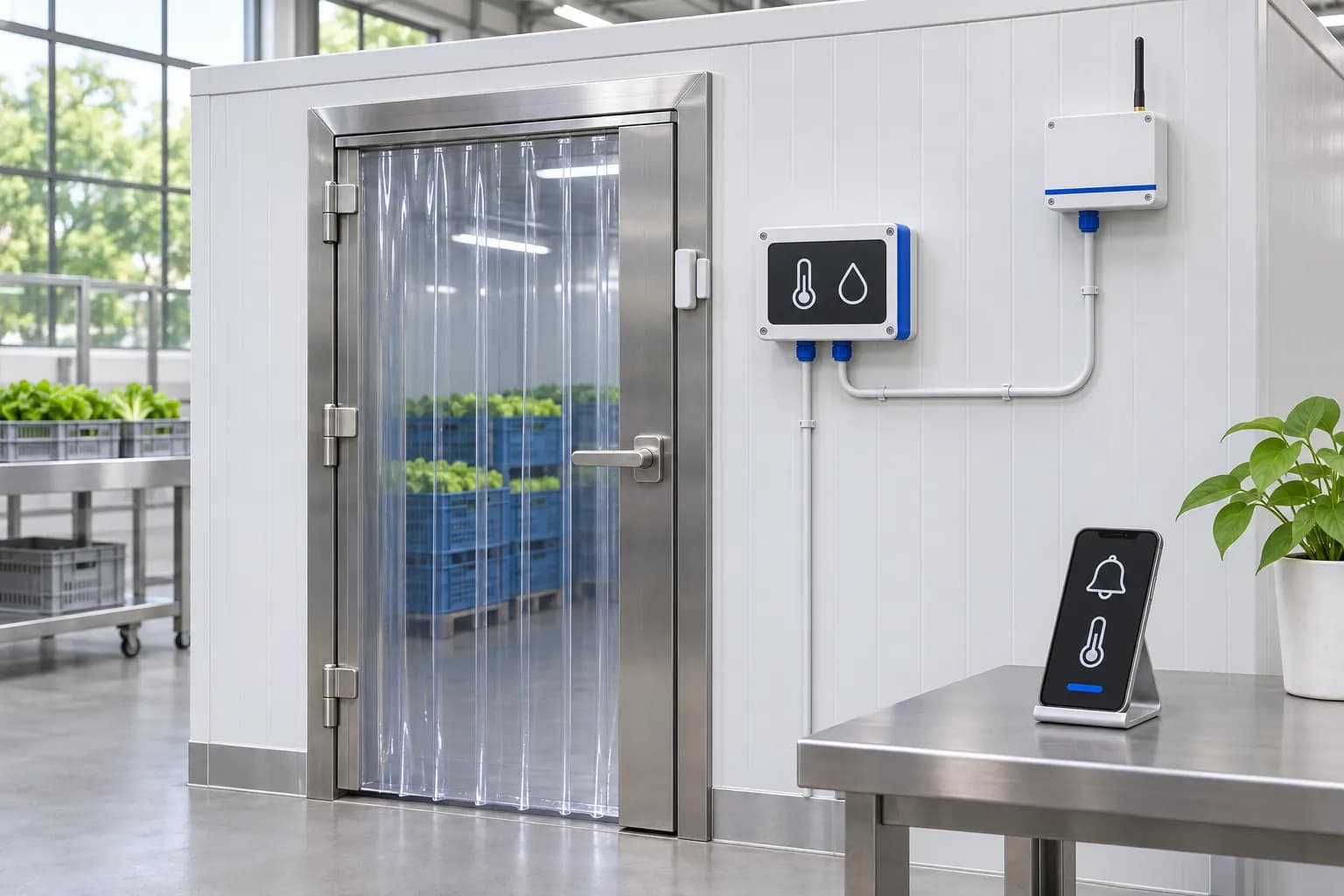
Before the system
Before the system, hand-written readings only cover the moments someone walked past
Many cold rooms and drying rooms still rely on a wall thermometer and a log sheet filled in on rounds. A reading therefore belongs only to the time someone looked. A fault between rounds or overnight may go unseen until someone notices the stock.
The fix is not simply adding sensors, because temperature differs across a room. Near the door and behind the racks may not match. A survey must decide where to measure, and the customer must agree who responds to an alert.
Where the system helps
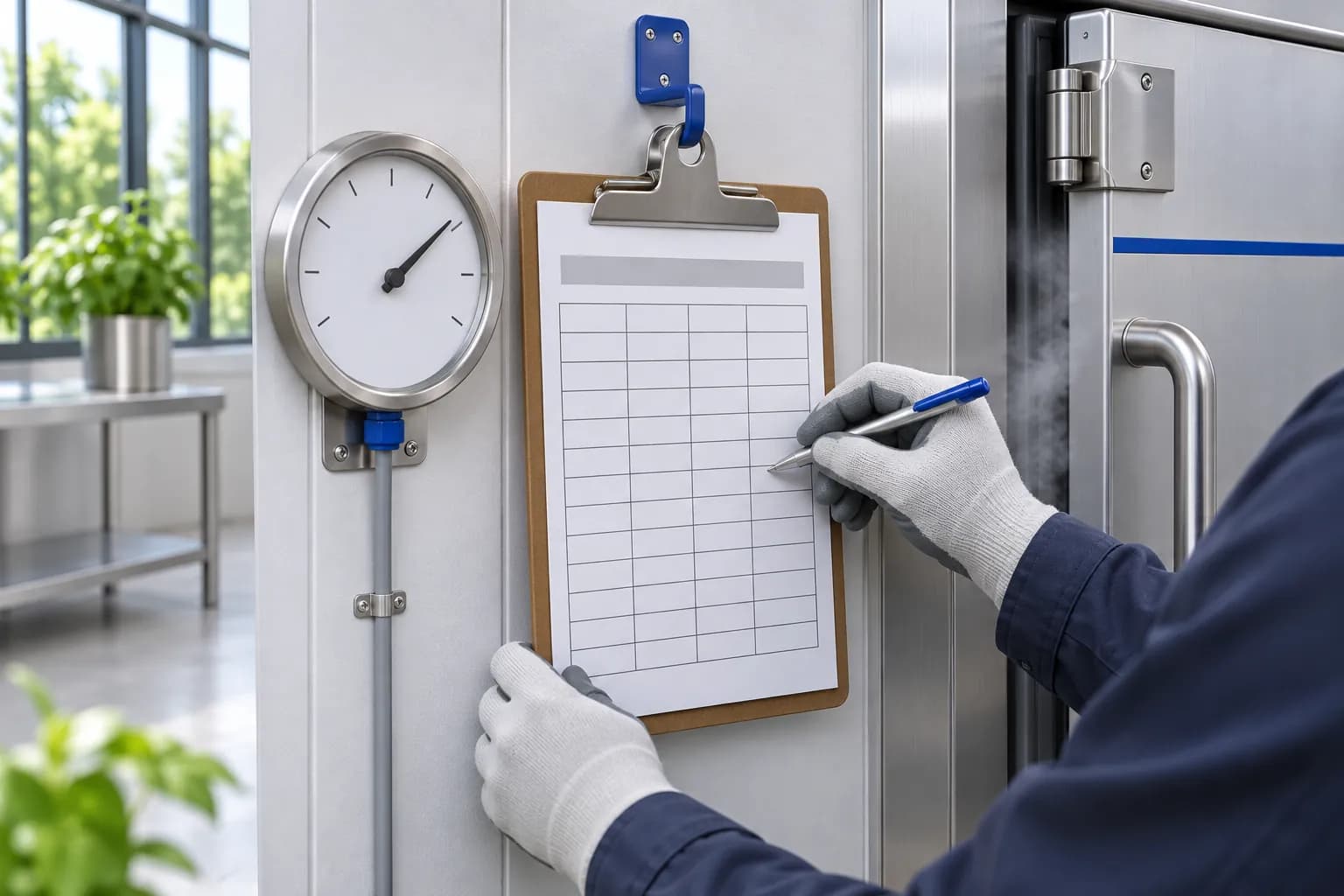
The system logs continuously and sends alerts to the responsible person
The concept shows a temperature and humidity display by the door, a wireless gateway on the wall, a door sensor and a phone that receives alerts. Sensors in the room send readings to storage for charts and reports.
The project scope sets measuring points, alert ranges and recipients with the customer. The acceptable temperature range belongs to the customer's responsible person. The system does not control the refrigeration, and a person still decides about the stock.
How the work flows
- 01
Survey room and logging
Review the layout, door, racks and current log method.
- 02
Test points and signal
Place temporary sensors to compare spots and check signal.
- 03
Agree the alerts
Settle ranges, recipients and steps for an incident.
- 04
Accept and rehearse alerts
Test a live alert and review reports with the responsible person.
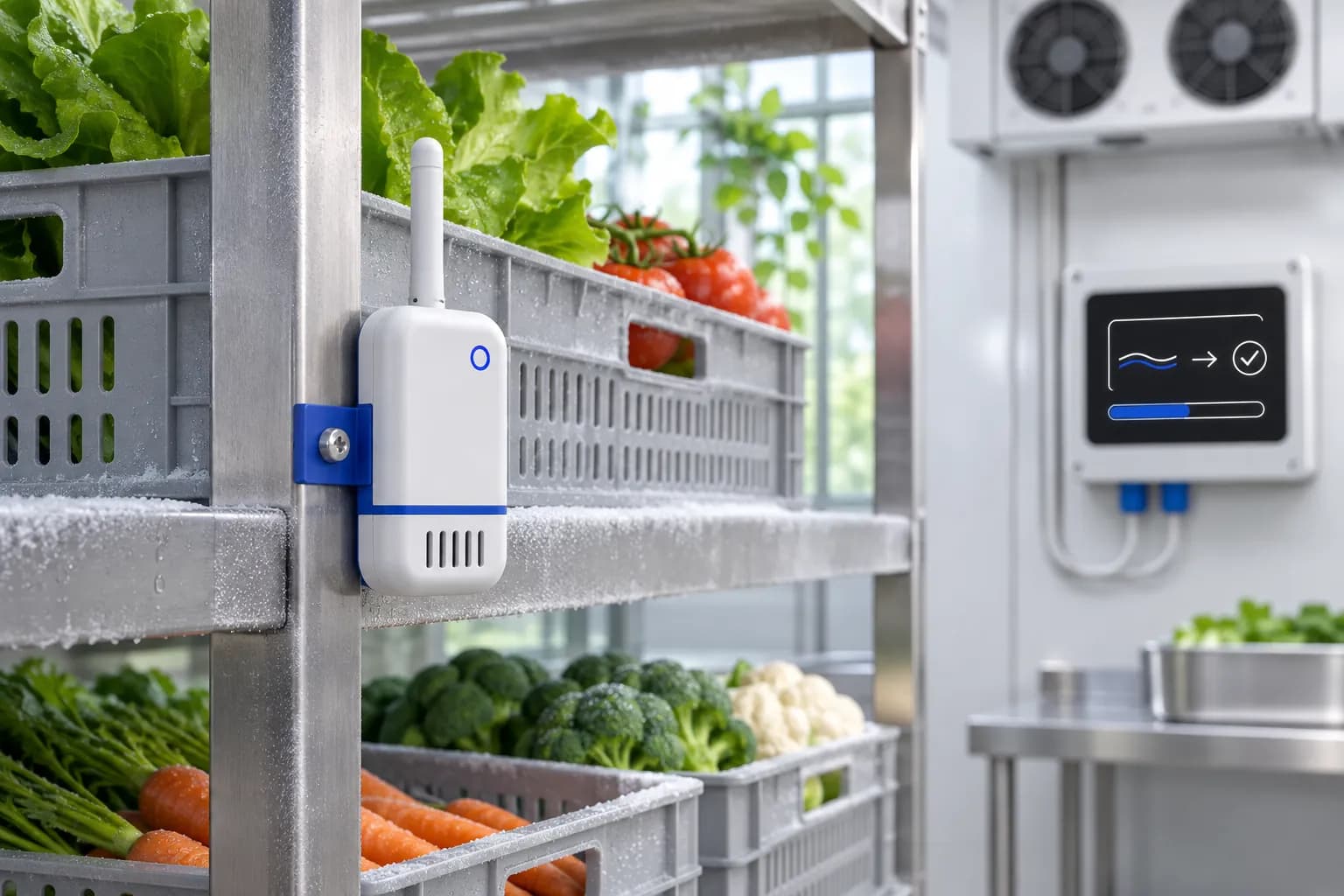
What the starter set includes
The last item is assessed separately for each job; the others are in the starter set. The actual scope is set out in each project proposal.
- Sensors at surveyed points in the chosen room
- A gateway and data storage for the readings
- Alert conditions and a list of alert recipients
- Use of the records in a standards audit is assessed separately
Further development, per project
These are directions to assess and test per project. They are not part of the starter set.
Escalating alerts
Concept · to be assessed- What it does
- Pass an alert to the next person when the first does not respond, following the customer's list.
- Benefit
- Less chance of an alert sitting unseen.
- Must pass before use
- The list, order and channels must be agreed with the customer, and out-of-hours receipt tested before real use.
Calibration records
Concept · to be assessed- What it does
- Keep sensor calibration dates and who did them beside the logged readings.
- Benefit
- Readings can be traced to a sensor that was calibrated.
- Must pass before use
- Calibration is done by a calibration provider. The system only stores records a person has confirmed.
Compressor power monitoring
Concept · to be assessed- What it does
- Fit a power meter on the compressor to see whether it ran or stopped as temperature changed.
- Benefit
- Helps tell a door problem from a refrigeration problem.
- Must pass before use
- The refrigeration technician must connect it and approve the measuring position.
Multi-site view
Concept · to be assessed- What it does
- Bring data from several locations onto a shared screen and report.
- Benefit
- A central manager sees the room at fault without visiting each site.
- Must pass before use
- Access must be separated by site, and each site's network checked first.
Linking time to lots
Concept · to be assessed- What it does
- Record when a lot goes in and out, then report on that period only.
- Benefit
- Easier to answer questions about room conditions while that lot was stored.
- Must pass before use
- A method for logging entry and exit times must be set and checked against real storage.
Backup power for the logger
Concept · to be assessed- What it does
- Add a backup power source for the logger and gateway.
- Benefit
- The logger keeps running through short outages, within the source's capacity.
- Must pass before use
- The load and time needed must be assessed, and the plant's electrician must install it.
Comparing ways of working
A comparison of ways of working, not measured before-and-after results.
| Topic | Usual approach | Proposed approach |
|---|---|---|
| Recording | Logged on each round | Recorded continuously, viewable later |
| Sensor placement | Fitted where convenient | Hot and cold spots surveyed first |
| When a value is off | Found when someone passes | Alert sent to the named recipient |
| Citing the records | Handwriting on a log sheet | Exported report, rules confirmed with the auditor |
Where it fits
Suits a cold room or drying room that is logged by hand today, where stock can spoil if left unnoticed for long.
Limits, and when it does not fit yet
If you want to change or control the refrigeration itself, start with its service provider. If nobody can receive alerts out of hours, agree recipients first.
What to prove before investing
- 01A survey of hot and cold spots before placing sensors
- 02Calibration evidence for the reference sensor
- 03A test of wireless signal through the cold room wall
- 04Who responds, and the steps once an alert is sent
FAQ
Frequently asked questions
Not assured in advance. Ask the auditor what data form is needed, and the sensors need calibration evidence the auditor accepts.
No. It says a value left its range, but someone must act. The effect on stock depends on how fast they arrive and the room's condition.
It is checked during the survey. The gateway can be moved, a repeater added or cable used, depending on the wall and real positions.
What to prepare before talking to us
You do not need all of it; start with what you have.
- A list of the machines to collect data from, with the PLC make and model if you know them.
- Photos of the control cabinets and the site.
- The forms or files you record on today.
- For inspection: sample parts or labels, both passes and fails.
Other products in this group
Production data kit and OEE dashboard
See where production time goes, using data that comes from the machine
Camera-based part measuring station
Measure repeated parts by camera instead of vernier, once tested on real work
In-line label and packaging inspection
Let a camera help check labels and codes on the line, once tested on real product
Remote pump and tank level monitoring
See pump status and water levels from afar, without driving out on every round
Per-machine and per-line energy metering
See electricity use by machine and by period, instead of one monthly bill total
Send the room layout and how you log today
Attach photos of the room, the stock type, the log sheet in use and who should receive alerts. The team will help define what to survey and test before agreeing scope.