

07 · R&D / Custom Devices
When what you need doesn't exist yet, we prototype it
We research and develop purpose-built devices (electronics, firmware, enclosures and software) in rounds of trials until a prototype meets the agreed operating conditions.
Problems this solves
- 01
Off-the-shelf devices don't meet site conditions such as size, environment or connectivity.
- 02
There's a product idea, but nobody knows yet if it can work.
- 03
You need a measurement or test tool built for your own process.
- 04
An earlier prototype worked in the lab but didn't survive real use.
Where it fits
Works well when
- You can describe the operating conditions: environment, power and size.
- You accept development in rounds, where each round may change the design.
- Real users or a site are available for field testing.
Limits to know
- A prototype is not yet a mass-production product; preparing for manufacture is a separate stage.
- Product certification is planned separately and tested by an accredited body.
- Some components are scarce or slow to arrive; alternatives are designed in from the start.
What we build
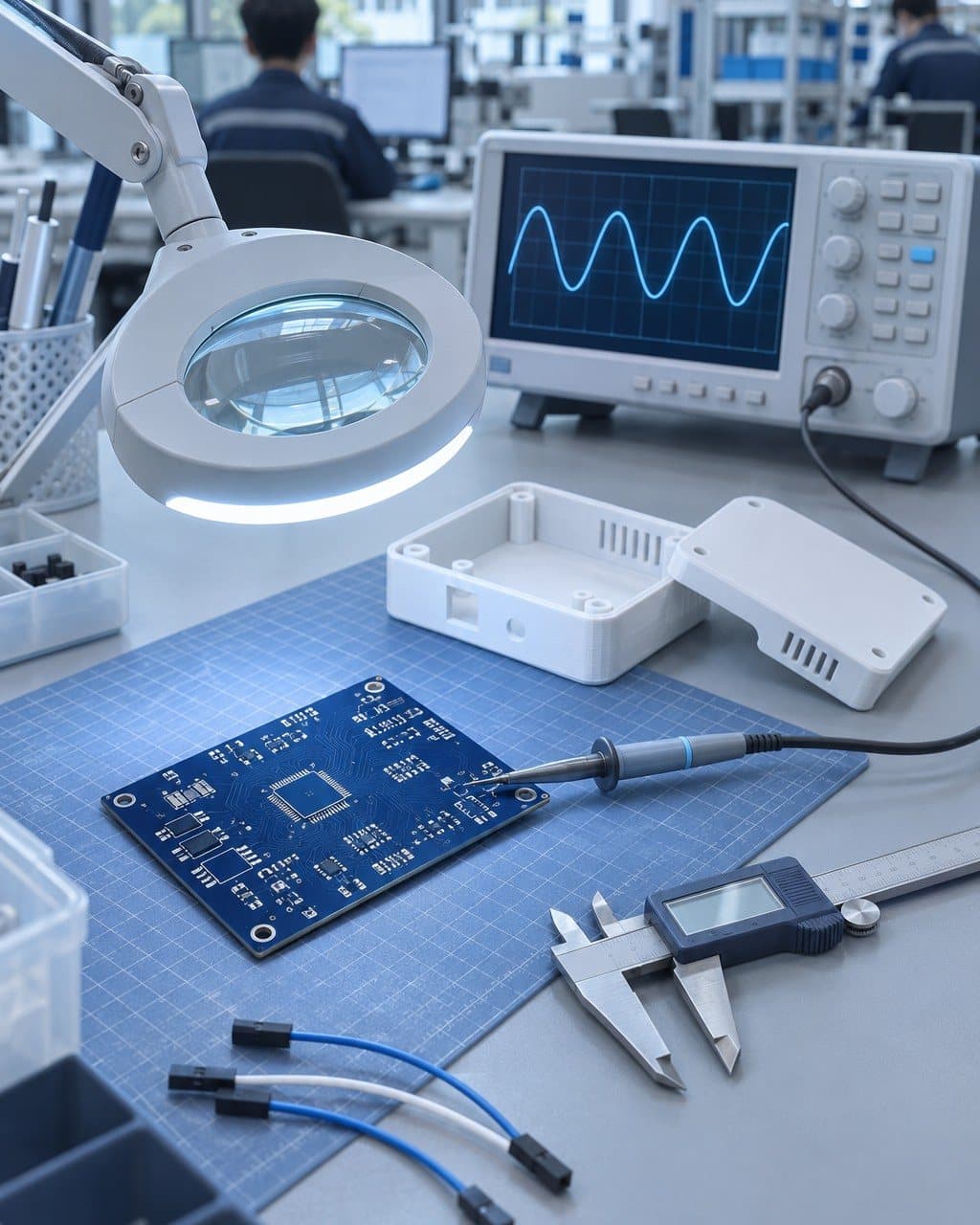
01
Feasibility studies
The core idea is tried on the bench before investing in a full design.
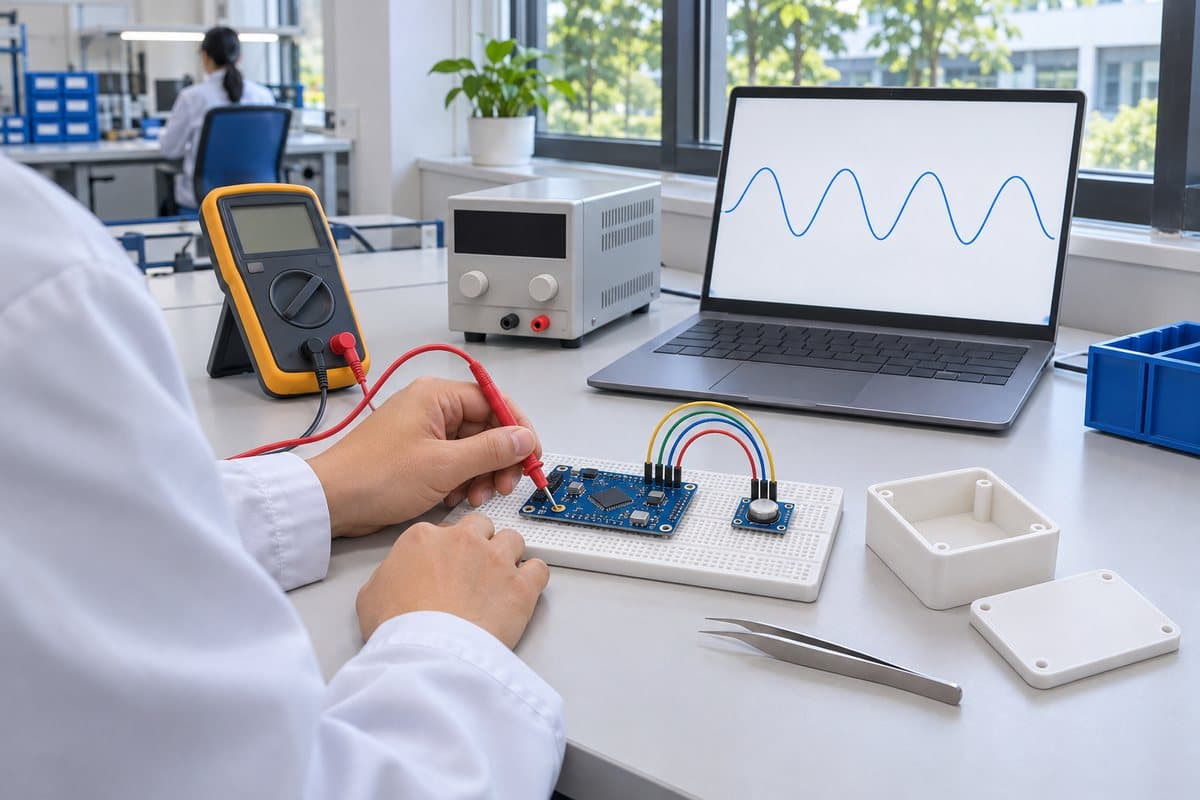
Illustration of our approach 02
Electronics and firmware
Circuit design, microcontroller and sensor selection, and firmware for control and communication.
- Parts chosen for continued availability, so the next build is not stuck on supply.
- Firmware that can be updated, and logs faults for later checking.
- Testing against the power supply, temperature and electrical noise of the real site.
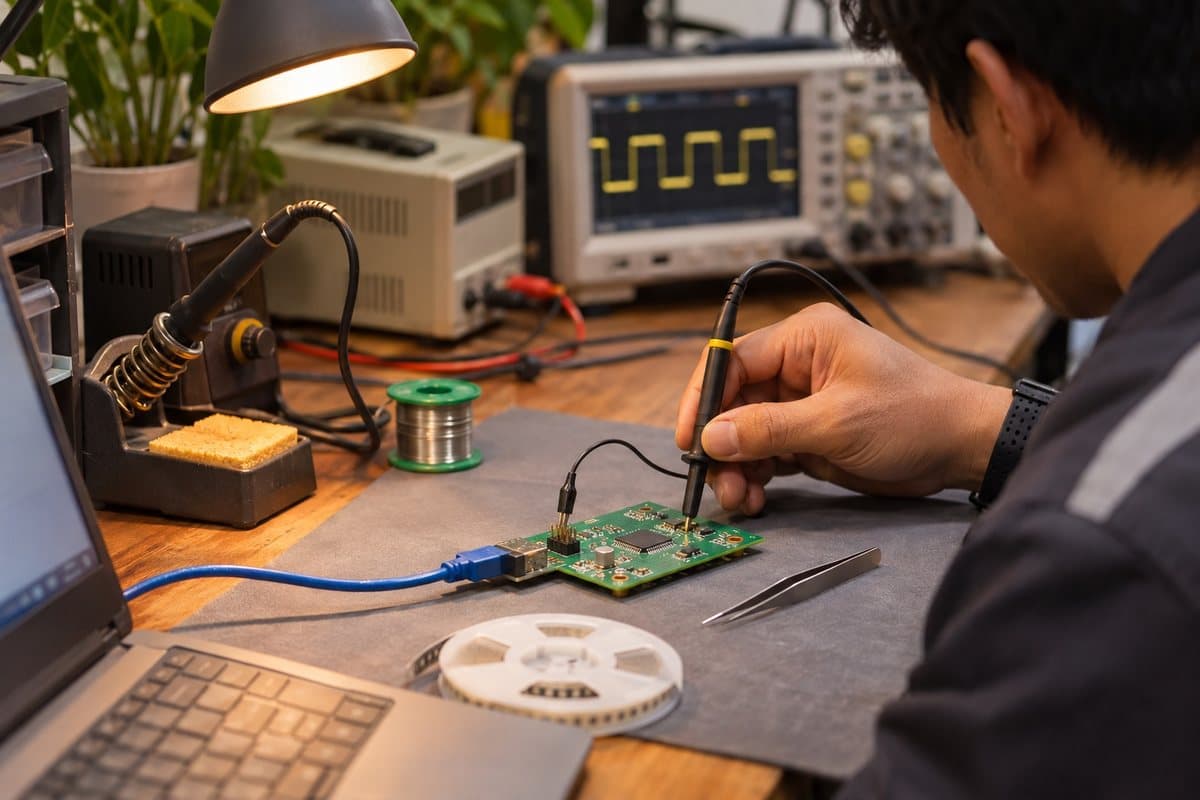
Illustration of our approach 03
Enclosure and mechanics
Enclosures and parts designed in CAD, then made as prototype parts for trial assembly.
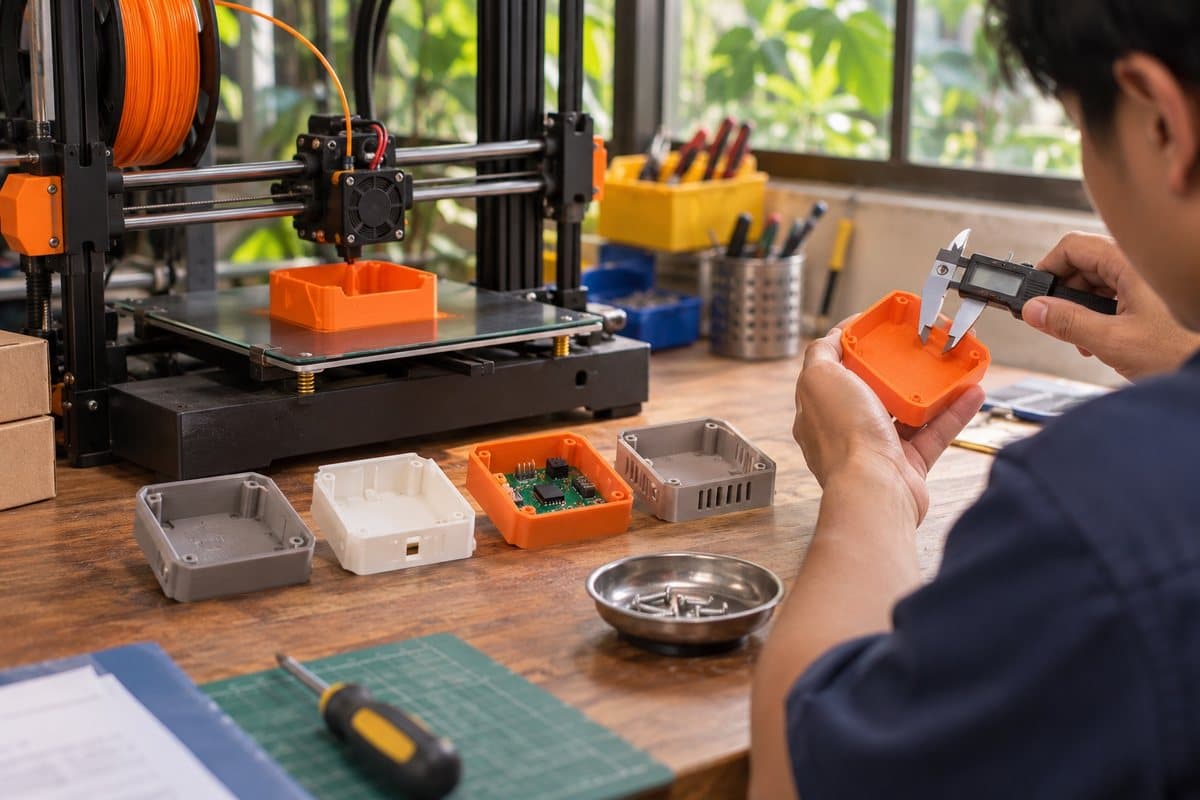
Illustration of our approach 04
Companion software
An app, web screen or data back end so the device is complete in use.
- A web page or app to configure the device and see its status.
- A back end that receives data from many devices over MQTT or HTTP.
- Data passed on to other systems such as SCADA or ERP where needed.
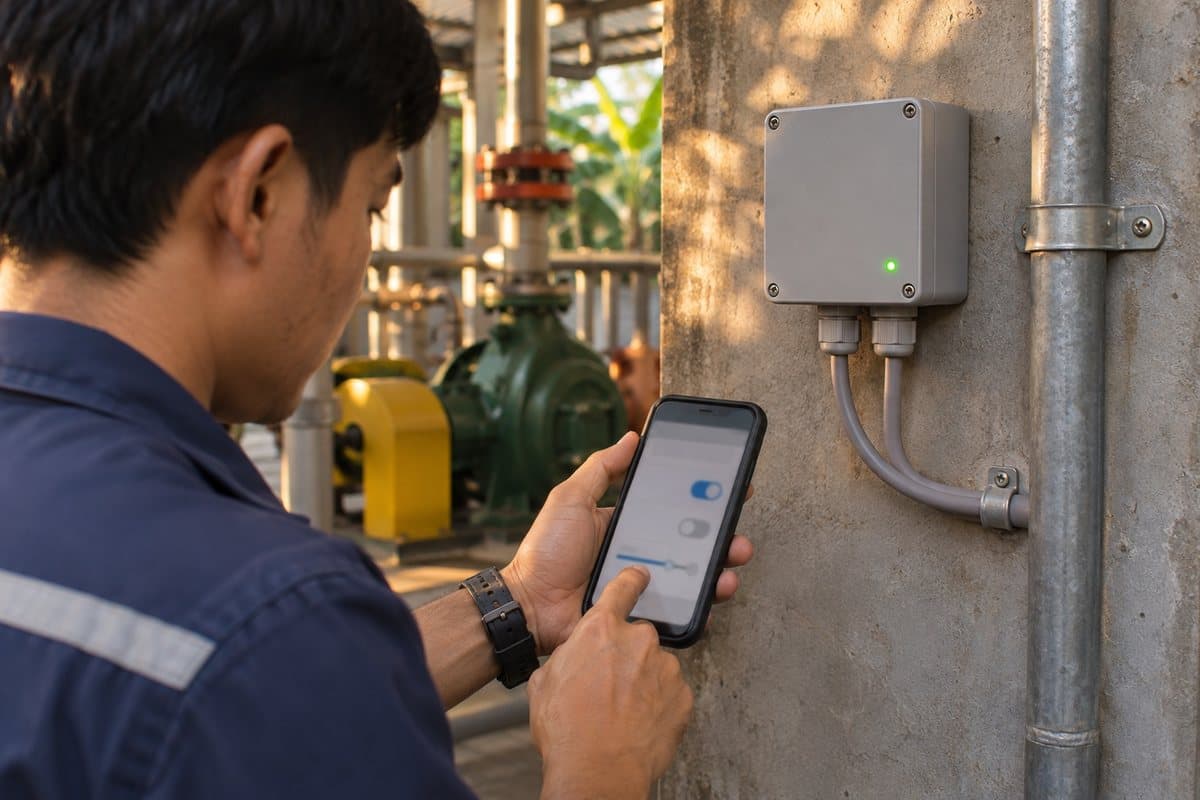
Illustration of our approach
How it works
A lab log
Research runs in rounds. Each round starts from a hypothesis, gets tested, and feeds the next design. This sequence is a concept example, not a real project.
LAB LOG · R01–R05
What rev B teaches becomes the next round's hypothesis
- R01
Hypothesis
Write down what we believe will work and how it will be measured.
- R02
Bench test
Try the riskiest part first, with whatever components are at hand.
- R03
Prototype rev A
Assembled as one unit to test the whole system working together.
- R04
Field test
Used in real conditions; everything that breaks or confuses is logged.
- R05
Prototype rev B
Redesigned from the field results and measured again against the same criteria.
What we need to start
You don't need all of this before we talk. The discovery stage works out what exists and what is missing.
- The brief and conditions: what it measures or controls, where, and who uses it.
- Limits on size, weight, power and environment.
- Existing devices or systems it must work with.
- The criteria a prototype must meet to pass.
Testing and acceptance
01
Bench-test each subsystem before full assembly.
02
Test against the agreed conditions, such as continuous running, heat, humidity or vibration, as relevant.
03
Field-test with real users and record every issue as input to the next round.
What is delivered
These are the items usually included in this kind of work. The exact scope of each project is set out in the agreed proposal.
- 01The agreed number of prototypes.
- 02Schematics, CAD files, firmware source and a parts list, under the rights set in the contract.
- 03A lab log and test results for every round.
- 04A recommendation for the next stage, such as a redesign or preparation for manufacture.
Related concept examples
There are no publishable examples for this area yet. Tell us your problem and we'll walk you through the possible approaches.
FAQ
Frequently asked questions
It is agreed in the contract before work starts, depending on the project model, and we list exactly which files are delivered.
That's why we start with a small feasibility study. If it shows the idea won't work or isn't worth it, you get the test results and reasoning before committing to the larger investment.
A prototype is the start. Volume production needs design-for-manufacture changes and a manufacturer; we can prepare documents and coordinate within the agreed scope.
Yes. We sign a confidentiality agreement before receiving drawings, data or product details.
Yes. We review the existing schematics, firmware and documents first, then tell you what can be kept and what should be redesigned.
Some products do, such as wireless devices or certain electrical appliances. We design with those requirements in mind and coordinate testing with accredited labs; the certificate itself is issued by the relevant authority.
The problem you want to solve, where and in what conditions the device will be used, the expected quantity, and any photos or drawings you have. If that is not all ready, we can start from the problem alone.
Further reading
Working on something like this?
Tell us your goal and how you work today, and our team will help find the right approach.