

Machine abnormality alert system
Spot a machine drifting from its usual state once its normal values are known
Start with a pilot machine. Fit sensors for vibration, temperature or current, learn the machine's normal values, and alert the maintenance team when readings drift so they can inspect.
Before the system
Critical machines are usually looked after by walk-rounds and personal experience
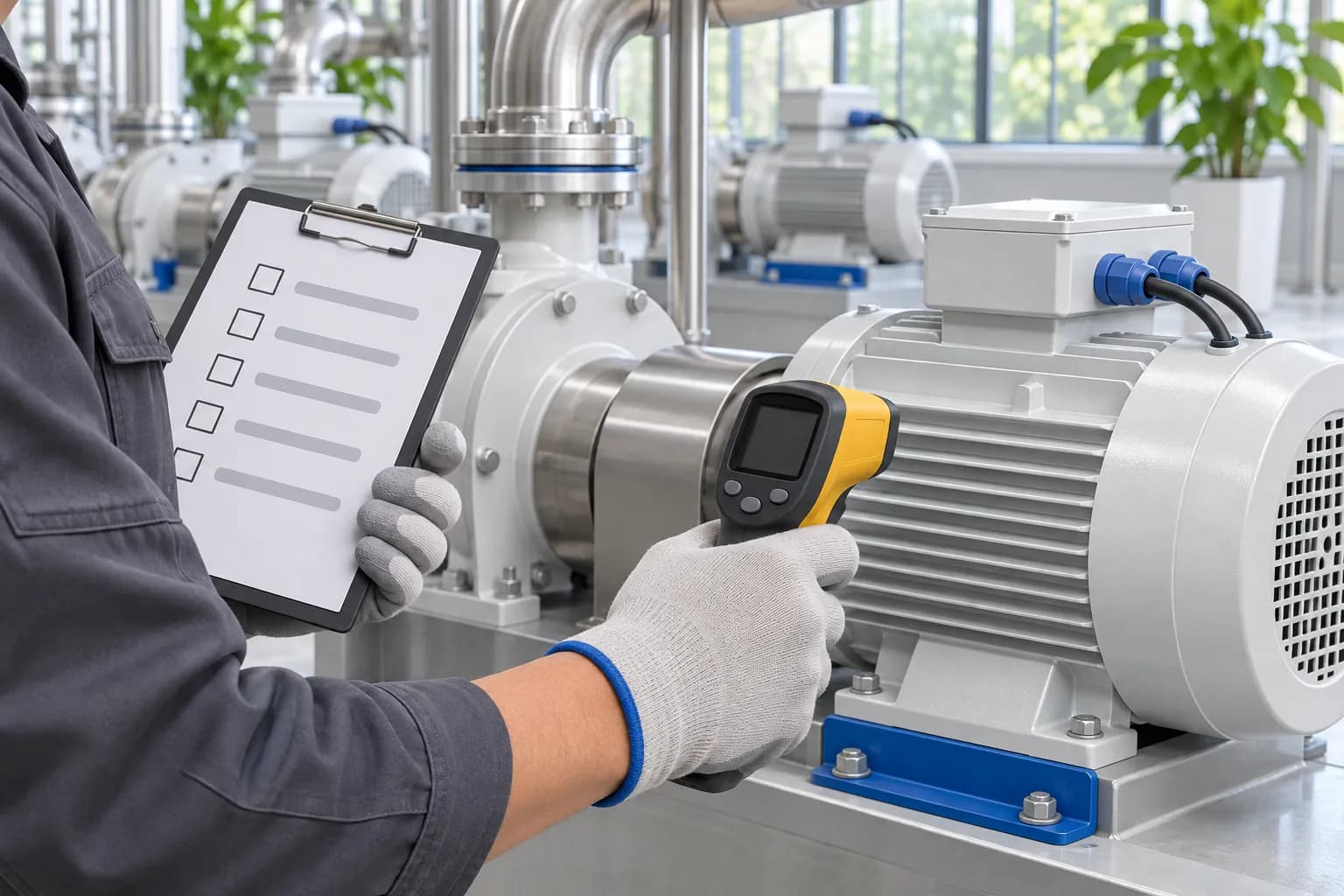
Technicians walk the rounds on motors, pumps and fans, checking by touch and sound and noting results on a form. Symptoms that appear between rounds may go unseen, and the notes are hard to compare over time.
Normal values differ from machine to machine and shift with load and season. Fixed thresholds may raise false alerts until people stop paying attention, so the real machine must be observed before thresholds are set.
Where the system helps
Fit sensors to the machine, record normal values, and alert the maintenance team on change
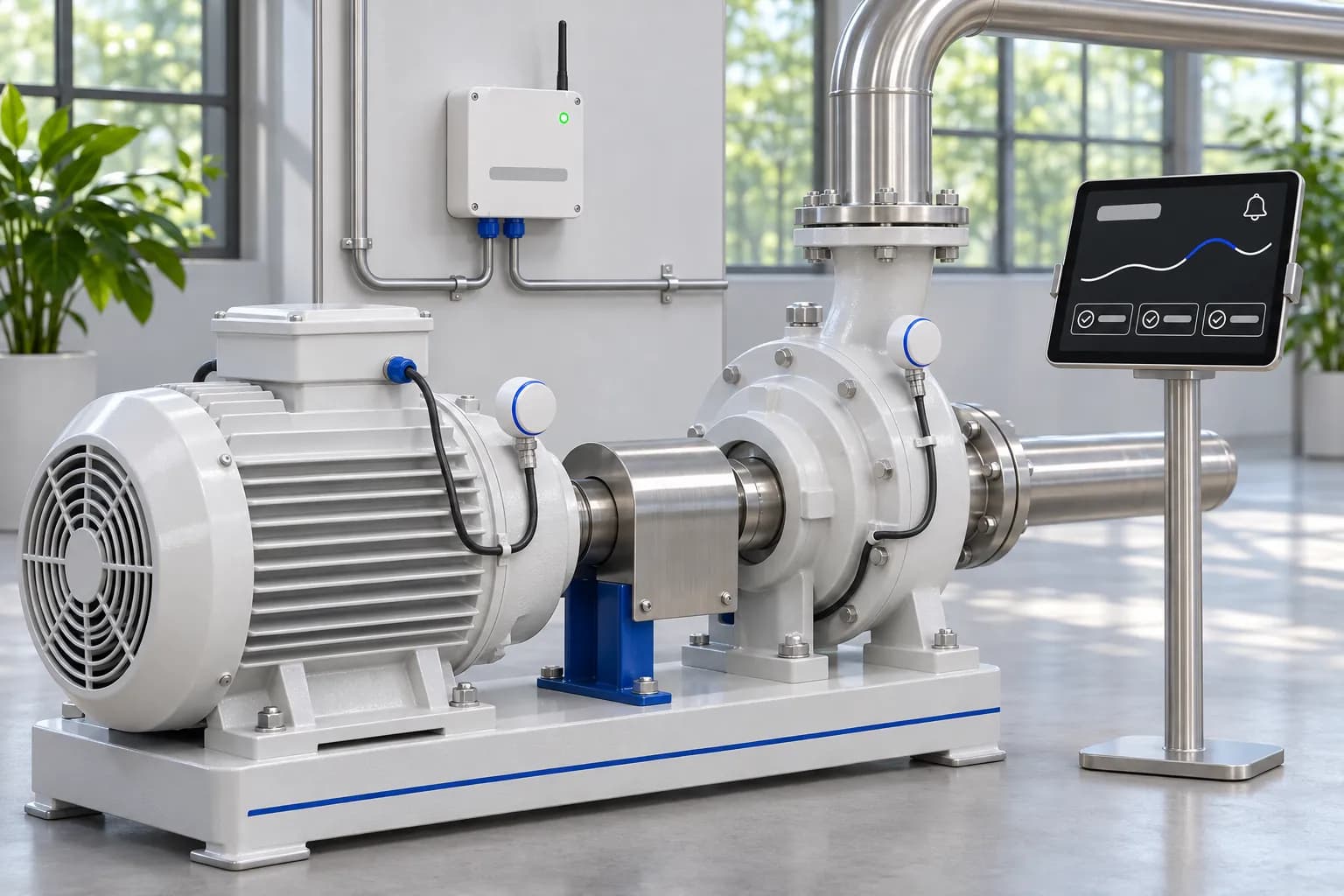
The concept image shows a motor and pump with sensors mounted on the casing, cabled to a data transmitter box, and a screen showing a trend graph with the machine's status.
The system only raises alerts. The maintenance team inspects and decides what to do with the machine. Scope is set after a survey, including mounting positions and who receives alerts.
How the work flows
- 01
Survey machine and area
Check mounting positions, safety and network signal.
- 02
Install and record baseline
Fit sensors and record normal running before alerts start.
- 03
Set thresholds with the team
Agree thresholds, recipients and the alert channel together.
- 04
Review and accept
Go through the alerts with technicians and adjust before acceptance.
What the starter set includes
The last item is assessed separately for each job; the others are in the starter set. The actual scope is set out in each project proposal.
- A pilot machine chosen together with the maintenance team
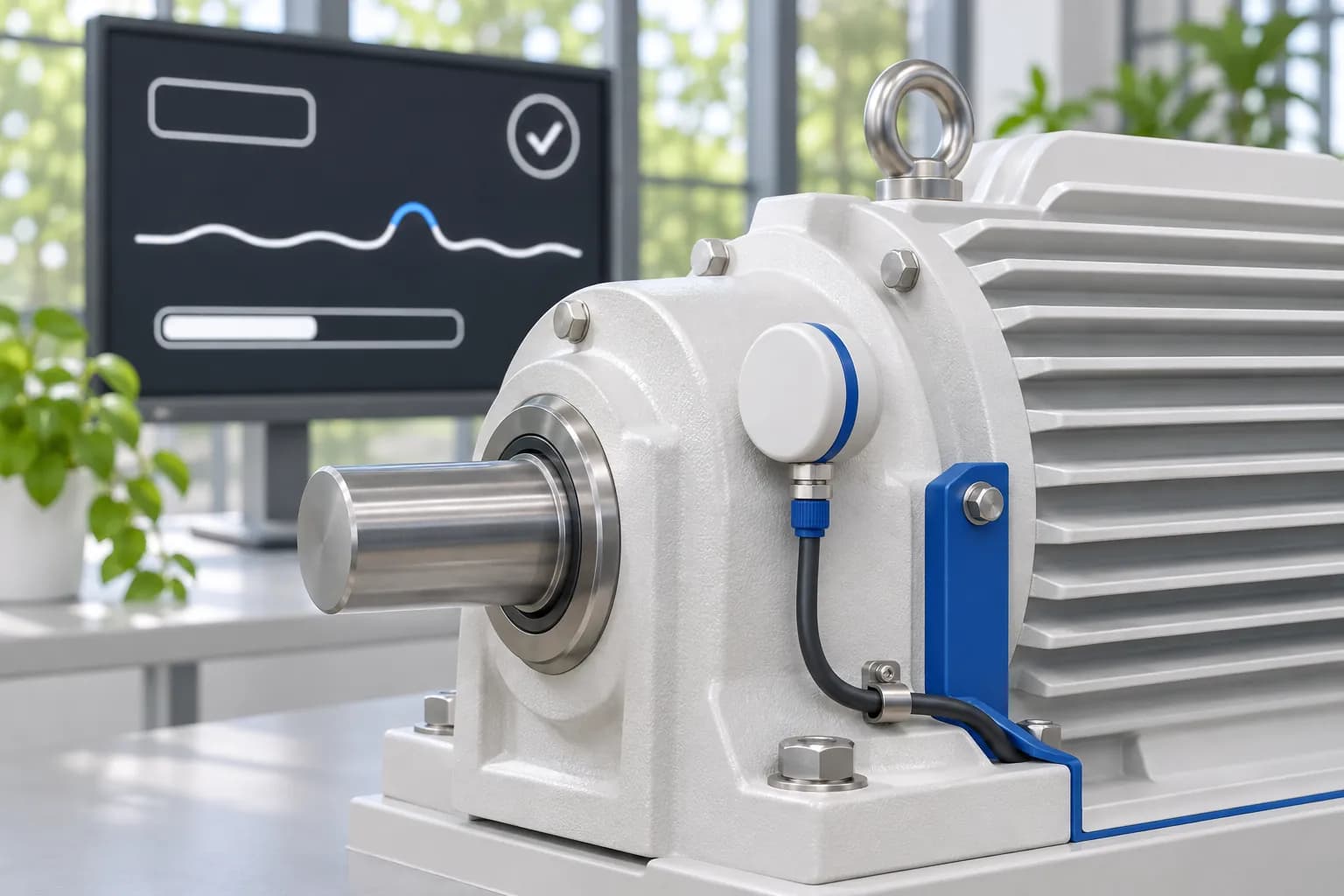
- Sensors and a data transmitter fitted to the machine
- A normal-baseline period before alerts are switched on
- Using PLC data alongside is assessed separately for the existing system
Further development, per project
These are directions to assess and test per project. They are not part of the starter set.
Open repair work orders
Concept · to be assessed- What it does
- Pass an alert to a work order in the maintenance system or ERP.
- Benefit
- Less re-keying once the maintenance team accepts the alert.
- Must pass before use
- An approver must confirm before a work order opens, and the existing system's connection must be checked first.
Vibration frequency analysis
Concept · to be assessed- What it does
- Look at vibration frequency patterns at the bearing to support inspection.
- Benefit
- Gives technicians extra information when inspecting.
- Must pass before use
- Must be tested with the real sensor and mounting. Results are supporting data and technicians still inspect.
Extend to other machines
Concept · to be assessed- What it does
- Add machines using the same normal-baseline steps.
- Benefit
- Reuses the approach tried on the pilot for the next machine.
- Must pass before use
- Each machine needs its own baseline, and network signal in the new area must be checked.
Cause and fix library
Concept · to be assessed- What it does
- Record the causes and fixes technicians confirm next to each alert.
- Benefit
- Makes it easier to review past alerts against what really happened.
- Must pass before use
- Record format must be agreed with the maintenance team, and someone made responsible for entering it.
Link to SCADA
Concept · to be assessed- What it does
- Send alert status to display in the existing SCADA system.
- Benefit
- Operators see machine status on the same screen as production.
- Must pass before use
- Data format, connection permissions and the existing system's owner must be checked first.
Thresholds by production run
Concept · to be assessed- What it does
- Separate normal values by product or by the load the machine runs.
- Benefit
- Fewer alerts caused by ordinary changes of job.
- Must pass before use
- A signal showing the production run is needed, and enough normal data per run must be collected.
Comparing ways of working
A comparison of ways of working, not measured before-and-after results.
| Topic | Usual approach | Proposed approach |
|---|---|---|
| Noticing symptoms | Wait for the next walk-round | See each machine's trend continuously |
| Setting thresholds | A shared default value | Normal values recorded from that machine |
| Who decides | Depends on each person's experience | The maintenance team inspects and decides |
| Routine inspection | The only method used | Kept, with the system as extra data |
Where it fits
Suits critical machines whose stoppage affects production and that run steadily enough to have a normal pattern.
Limits, and when it does not fit yet
If a machine runs too unevenly to have a normal pattern, or nobody is responsible for responding to alerts, start with a routine inspection plan and named owners.
What to prove before investing
- 01A normal running period long enough to learn from
- 02Alert thresholds agreed with the maintenance team
- 03A review of false alerts together with technicians
- 04A safe mounting position that respects the maker's conditions
FAQ
Frequently asked questions
No. It alerts only when readings drift from what was recorded. The maintenance team must inspect the machine to find the cause.
No. Routine inspection is still needed. The system is extra information that helps technicians notice symptoms between rounds.
It may in the early period, so alerts are reviewed with the maintenance team and thresholds adjusted before real use.
Further reading
What to prepare before talking to us
You do not need all of it; start with what you have.
- Sample documents or data for the system to read, with personal data removed first.
- Common questions or cases with their correct answers, used to check results in the pilot.
- Your data rules, such as whether data may leave the company.
- For machine monitoring: the readings already taken and any breakdown records.
Send details of a critical machine to start the survey
Tell us the machine type, its location and any past symptoms. The team will help define what to survey before choosing the pilot machine.