By ยศกร จิรพงศานานุรักษ์, Founder · 8 min read · Smart factory
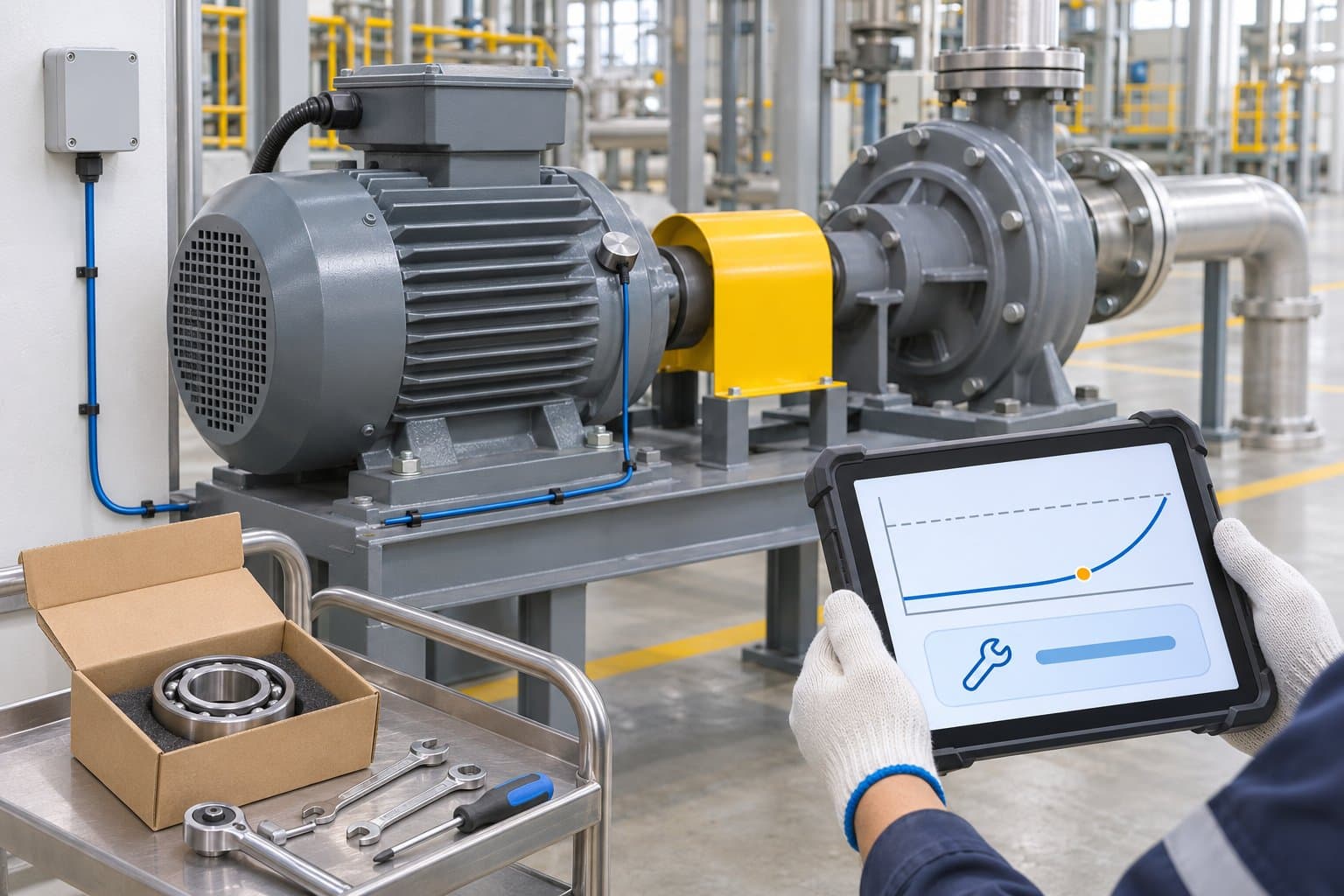
Predictive Maintenance (PdM) means attaching sensors to machines and letting AI watch for signs that a machine's condition is changing abnormally, so it can warn you before the machine actually fails. This differs from scheduled servicing, which replaces parts according to running hours whether the part is still in good condition or close to failing.
How do the three kinds of maintenance differ?
- Reactive: repair after it breaks. Cheapest at the start, but most expensive when the line stops in the middle of an urgent order.
- Preventive: replace on a time schedule. Safer, but you pay for parts that could still be used for several more months.
- Predictive: replace when the data says the time is near. You get the full life of the part and avoid the risk of a sudden stop.
What data does the AI look at to know a machine is about to fail?
- Vibration: the vibration signature can change weeks before a bearing fails.
- Motor current signature: motor current can reveal abnormal load, shaft misalignment and worn impellers.
- Temperature: abnormal hot spots at bearings, gearboxes and connections inside electrical cabinets.
- Ultrasonic: picks up compressed-air leaks and arcing inside electrical cabinets, sounds the human ear cannot hear.
- Existing PLC/SCADA tags: rotation speed, pressure and flow rate that the factory already collects but has never put to use.
Which machines should you start with to get the best return?
Do not start with the whole factory at once. Rank machines by the cost of lost opportunity per hour when they stop, then choose the first 3 to 5 machines that hurt the most each time they stop. These are usually the line bottleneck, the compressed-air compressor, the main pump, or a motor with no spare in stock. Once the first case has proven the result, expanding to other machines makes it much easier to get budget approval.
A common misunderstanding: thinking you must collect several years of data before you can start with AI. In fact most work starts with anomaly detection, which can learn from a period of normal machine operation within a few weeks, and becomes more accurate once there are real failure cases for the system to learn from.
What do you need to invest in?
- Vibration or current sensors, according to the number of measurement points.
- A gateway that collects data from the measurement points and sends it into the central system.
- Historical data storage and an alerting dashboard.
- Integration with the existing repair-request system, so that an alert becomes a real work order and not just a nice chart.
Is it worth it? A quick ROI estimate
The simplest formula is to take the number of unplanned line-stop hours per year, multiply by the cost of damage per hour, and then assume that PdM reduces this by roughly 30 to 50 percent. For example, if one line has 60 hours of unplanned stops a year and each hour costs 50,000 baht, a reduction of half would save 1.5 million baht a year, which is often several times the cost of installing the first set of measurement points. Real figures depend on the type of machine and how often it fails, so you should calculate with your own downtime statistics before deciding.
Frequently asked questions
Do you have to replace the PLC or rebuild the existing control system?
No. In most cases additional sensors are fitted in parallel, and existing tags are read from the PLC or SCADA over standard protocols, so the line's existing control logic is not affected.
Does the data have to go to the cloud?
Not necessarily. It can run entirely on a server inside the factory, which suits factories with a policy against data leaving the organisation, or with an unstable internet connection.
Will the system raise false alarms often?
In the early period there are some false signals, because the system does not yet know every normal operating mode, such as running empty or changing production recipes. To reduce them, have the maintenance team confirm the result of every alert. In general the system settles down noticeably within 4 to 8 weeks.
Can a small factory do it?
Yes. Start with the single machine that hurts most when it stops, then expand. The cost per measurement point has fallen a great deal in recent years, which makes small pilot projects realistic for SMEs.