By ยศกร จิรพงศานานุรักษ์, Founder · 7 min read · Smart factory
Industry 4.0 doesn't mean you have to invest tens of millions on day one. For Thai SMEs, the better approach is to first make production data visible, then build on it with dashboards, automation and AI according to the budget available. The right order matters more than the amount of money.
What is Industry 4.0 (the real-factory version)?
The core of Industry 4.0 is connecting machines, data and people so that decisions are made from real data in real time. It is not about buying a pile of robots, but about making the factory aware of how it is producing right now and what should be adjusted.
Five levels of factory readiness
- Level 1: data collected by hand/on paper, no overall picture yet
- Level 2: some digital data, but kept in separate places
- Level 3: real-time data visible on a dashboard (SCADA)
- Level 4: production connected to MES/ERP, managing the whole line
- Level 5: using AI/predictive analytics to analyse and forecast
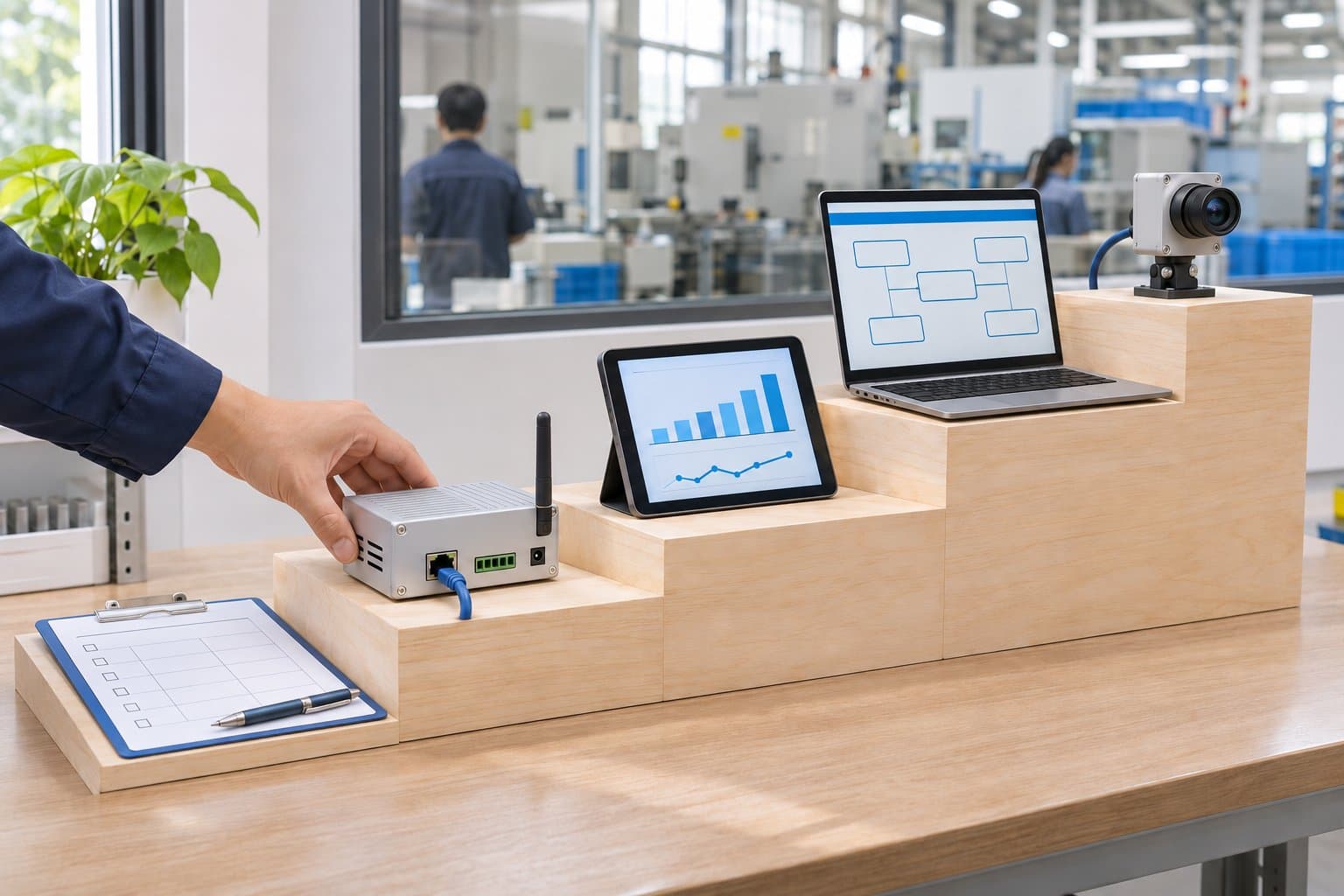
A roadmap that starts from a limited budget
- First make data from existing PLCs/sensors visible (low investment, fast results)
- Build a dashboard showing OEE and downtime for the key lines
- Choose automation only at the most worthwhile points (bottlenecks or work at risk of human error)
- Build on to AI/predictive analytics once enough data has accumulated
The most common mistake is investing in robots or AI before basic data exists, which leaves you with something expensive whose return can't be proven. Always make the data visible first.
How does open source help reduce costs?
Tools such as Node-RED, ThingsBoard, Grafana and Odoo let you start Industry 4.0 without paying large annual license fees, and they still connect to existing PLCs/systems. This lets an SME start small and expand once the first line shows results.
Frequently asked questions
Can an SME with a limited budget start Industry 4.0?
Yes. Start by bringing PLC data from the key lines into a dashboard, then expand once you see the return.
Do we have to replace existing machines?
In most cases no. Older machines that have a PLC or output signals can still provide data. If they have none, additional sensors can be fitted at specific points.
How long before we see results?
The first phase (seeing real-time data) usually takes 4–8 weeks, and points for improvement start to show immediately once data is available.