

Weighing, labelling and lot traceability
Trace a box back to its lot, when scanning follows the real process
Start by surveying the packing point and the steps produce passes through, then assess a weighing station that prints lot-code and QR labels and records data for tracing back from a product box.
Before the system
With handwritten notes, finding a box's origin can take a long time
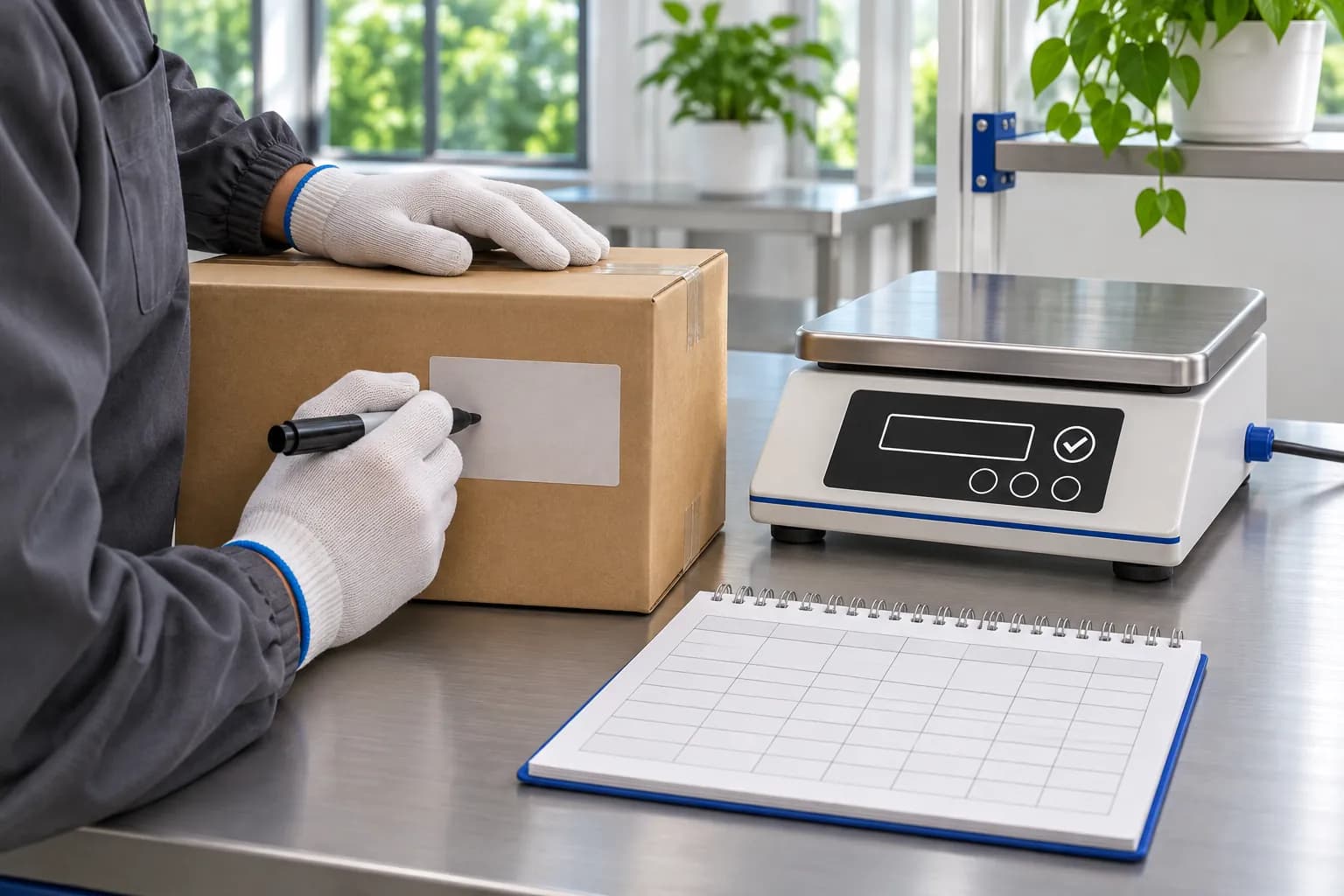
At the packing point a worker may weigh, then write the weight and lot on a label or in a book. When a buyer asks where a box came from, someone must go through several books, and handwriting may be unclear or missing.
It is not easy to fix. The data must match the real process, some buyers set their own label format, and the scale must be connectable, so the site is surveyed before the system is designed.
Where the system helps
Assess a weighing, printing and scanning station that records lots for tracing
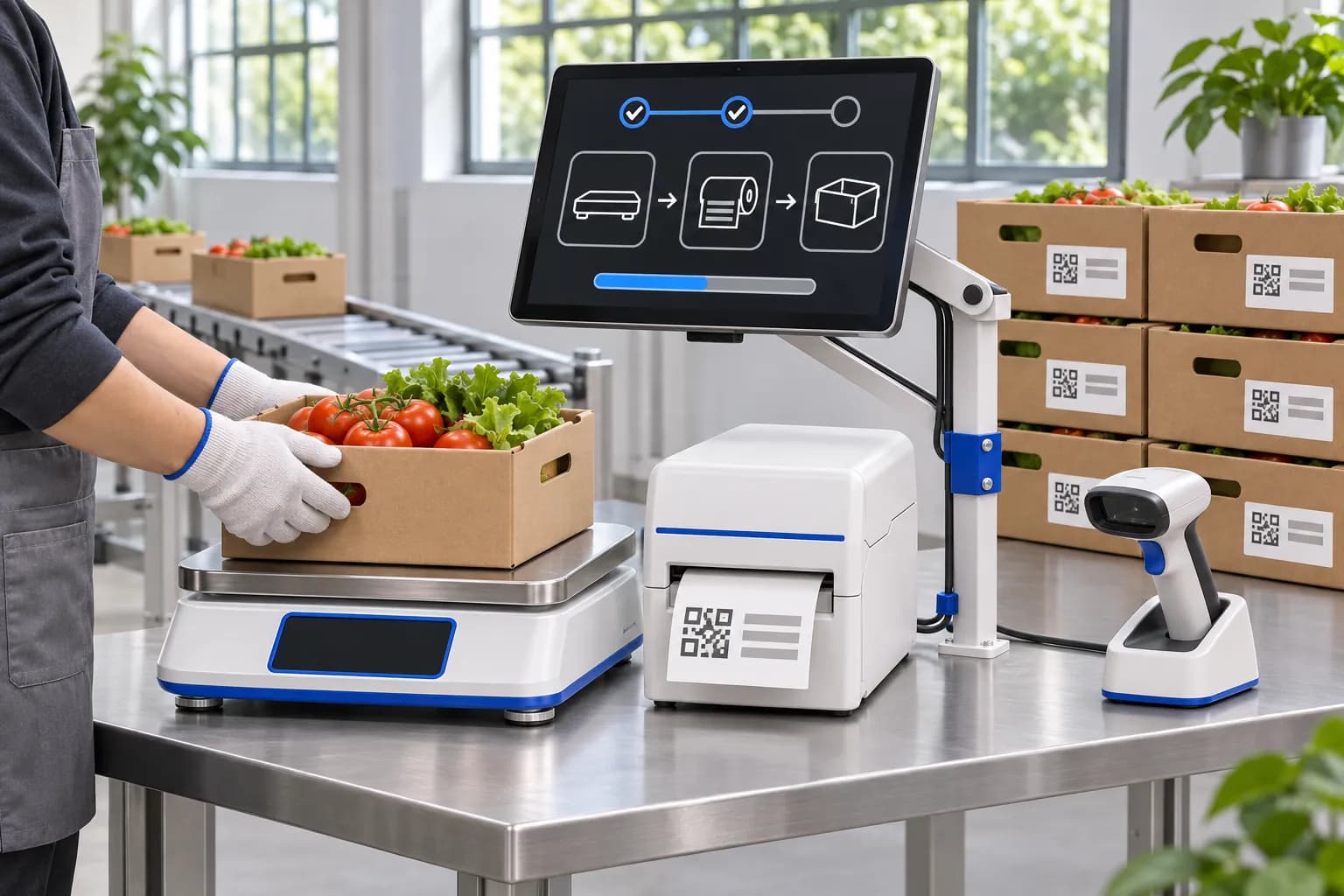
The concept image shows a scale linked to a tablet, a label printer producing QR codes, a handheld scanner, and labelled produce boxes stacked ready for dispatch.
The project defines where scanning happens, who keeps master data and who reviews reports, before testing on real produce. The owner of the work confirms that lot data is correct.
How the work flows
- 01
Survey packing point and steps
Look at the scale, current labels and where produce changes hands.
- 02
Design data and labels
Agree lot codes, master data and label format together.
- 03
Trial at the weighing station
Test scale link, label printing and scanning on real product.
- 04
Accept the tracing search
Trace from a box to its lot with the responsible person.
What the starter set includes
The last item is assessed separately for each job; the others are in the starter set. The actual scope is set out in each project proposal.
- A weighing and label-printing station at the packing point surveyed
- Product master data and lot creation under rules agreed together
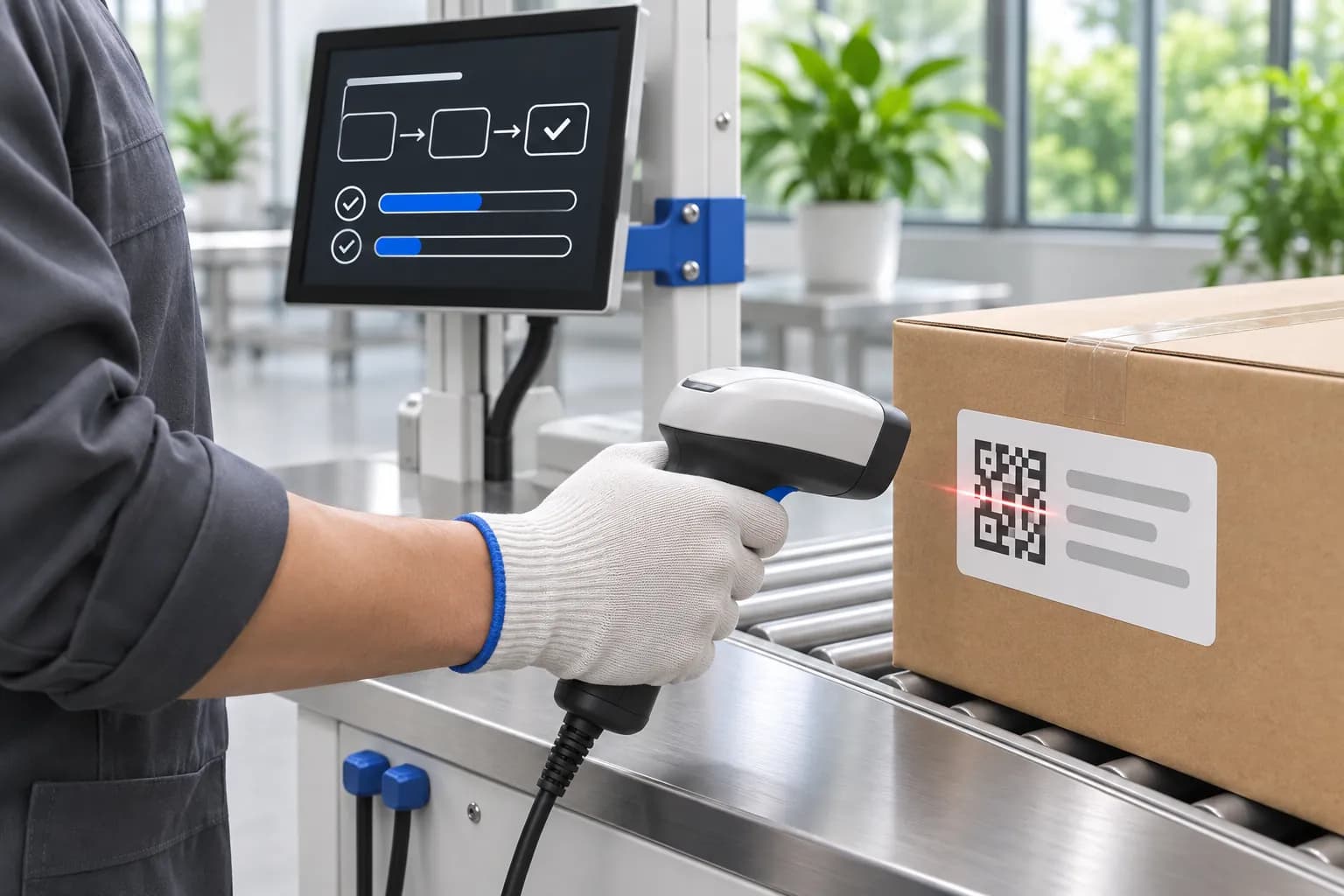
- Scanning at dispatch to link each box to its lot
- A full warehouse system is assessed separately on site
Further development, per project
These are directions to assess and test per project. They are not part of the starter set.
Record lots at receiving
Concept · to be assessed- What it does
- Record incoming raw-material lots so they link to lots packed later.
- Benefit
- Tracing can reach the raw-material source across more of the chain.
- Must pass before use
- A scan point or document at receiving is needed, and a responsible person must confirm source data.
Send lot data to ERP
Concept · to be assessed- What it does
- Send lots and packed quantities to the customer's existing ERP.
- Benefit
- Keeps lot data alongside the company's stock records.
- Must pass before use
- Data format and access rights must be checked, and accounting must approve before it touches stock figures.
Extend to more stations
Concept · to be assessed- What it does
- Share master data across several weighing stations in the packing house.
- Benefit
- Less repeated set-up when packing points are added.
- Must pass before use
- Simultaneous data use and lot naming rules between stations must be tested.
Alert on over or under weight
Concept · to be assessed- What it does
- Set an alert when the weight on the scale falls outside the range set for the product.
- Benefit
- Helps staff notice a problem before labelling.
- Must pass before use
- A responsible person must set the weight range, and trade-scale requirements must be checked.
Warehouse scanning by phone
Concept · to be assessed- What it does
- Scan boxes in the warehouse with a phone to record location and movement.
- Benefit
- Boxes can be followed after leaving the packing point.
- Must pass before use
- Warehouse network signal and label durability in cold or humid conditions must be tested.
Lot lookup page for buyers
Concept · to be assessed- What it does
- Scan the QR code to open a page showing the lot data the customer allows.
- Benefit
- Buyers can check a box's origin themselves, within granted access.
- Must pass before use
- Decide what may be shown, and review personal data and trade-secret concerns.
Comparing ways of working
A comparison of ways of working, not measured before-and-after results.
| Topic | Usual approach | Proposed approach |
|---|---|---|
| Lot recording | Handwritten in a book or on a label | System records when weighing and printing |
| Searching | Turning through book pages | Scan a box and open the lot report |
| Data kept | Some weights or lots only | Weight, product, lot, time, packer |
| Buyer rules | Fix labels when asked | Check the format together before use |
Where it fits
Suits packing houses or food plants that must be able to say which lot a box came from.
Limits, and when it does not fit yet
If the workflow cannot take extra scan points, or a full warehouse system is wanted from the start, begin with a process map and data points.
What to prove before investing
- 01How the scale connects, and trade-scale requirements
- 02The label format set by the end buyer
- 03How the station behaves when the network fails
- 04Scan points that follow the real process, and label material in the cold
FAQ
Frequently asked questions
No. Requirements must be confirmed with the buyer or the customer's auditor. The system only records and searches data in the format agreed.
It depends on the design. Test whether the station can hold data and send it later, and have a person check the data before it is used for tracing.
Not yet. Raw-material lots must also be recorded at receiving. Without that point, tracing reaches only the lot that was packed.
What to prepare before talking to us
You do not need all of it; start with what you have.
- Sample documents you use, such as purchase orders, delivery notes and invoices, with personal details blacked out.
- The Excel files or forms used in daily work.
- A rough outline of who does what, and in what order.
- The accounting program or other systems in use that need to connect.
Send your packing process map to start the lot assessment
Attach photos of the packing point, the labels you use, the scale model and any buyer requirements. The team will help define the survey and trials needed before scope is agreed.