By ยศกร จิรพงศานานุรักษ์, Founder · 6 min read · Machine vision
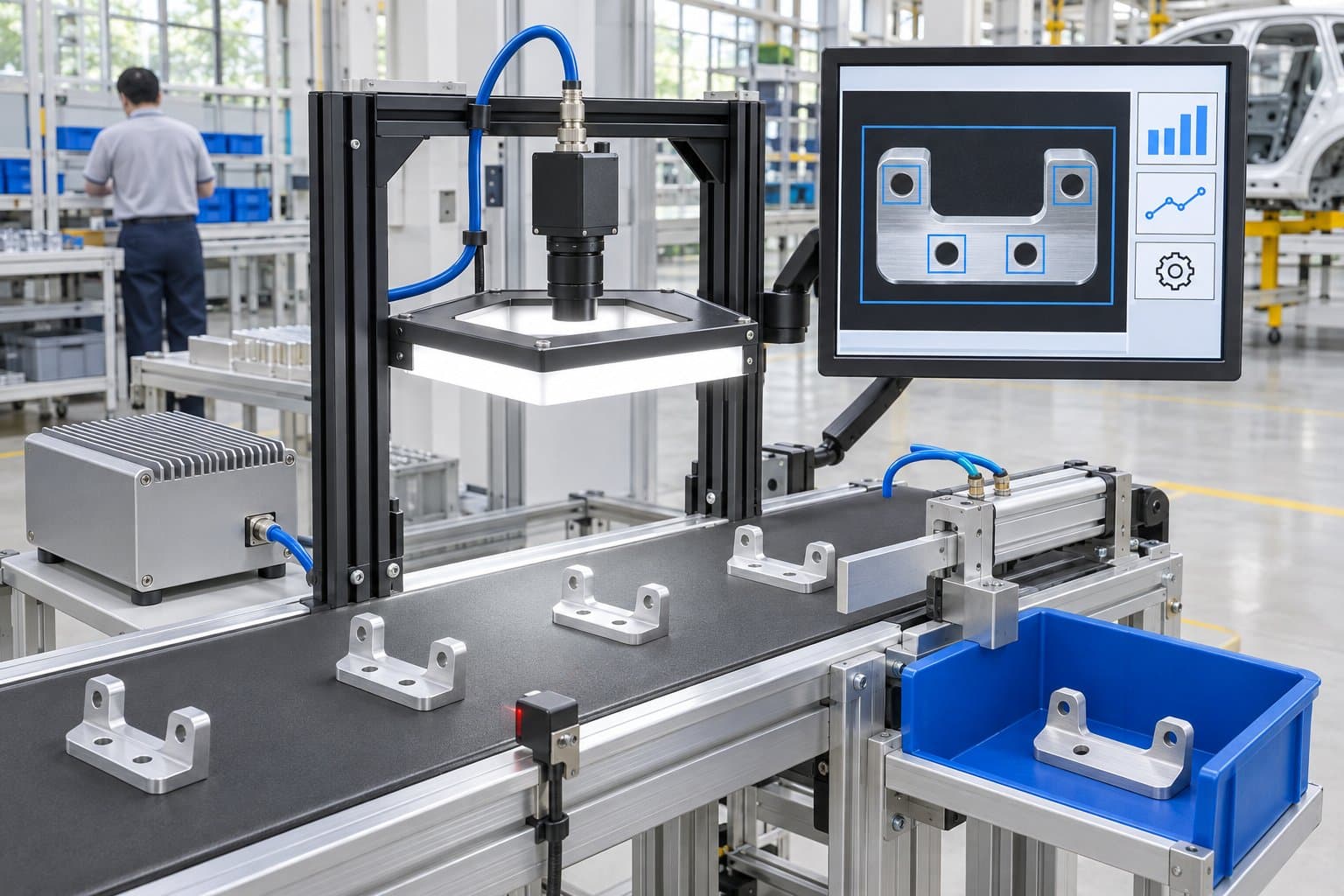
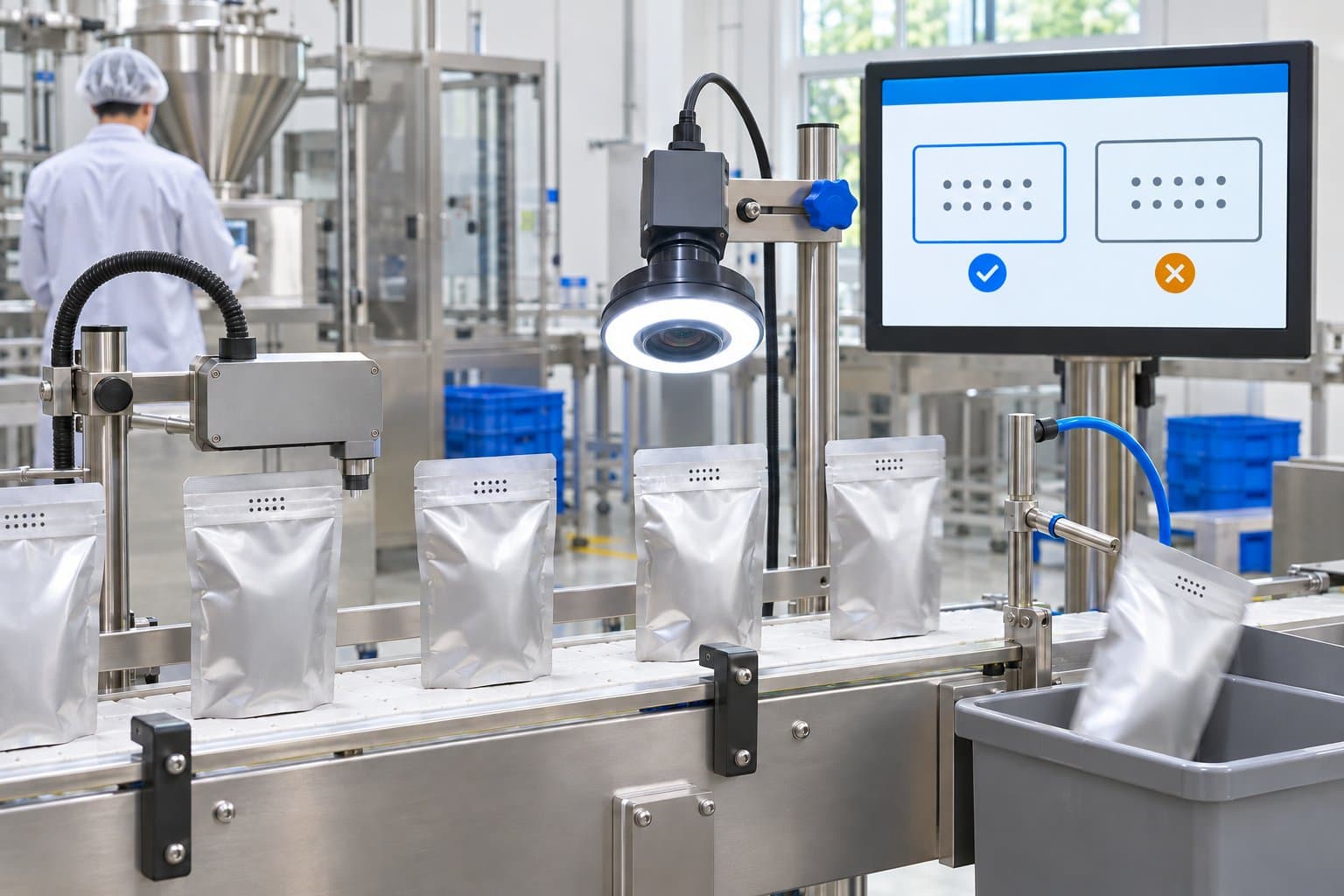
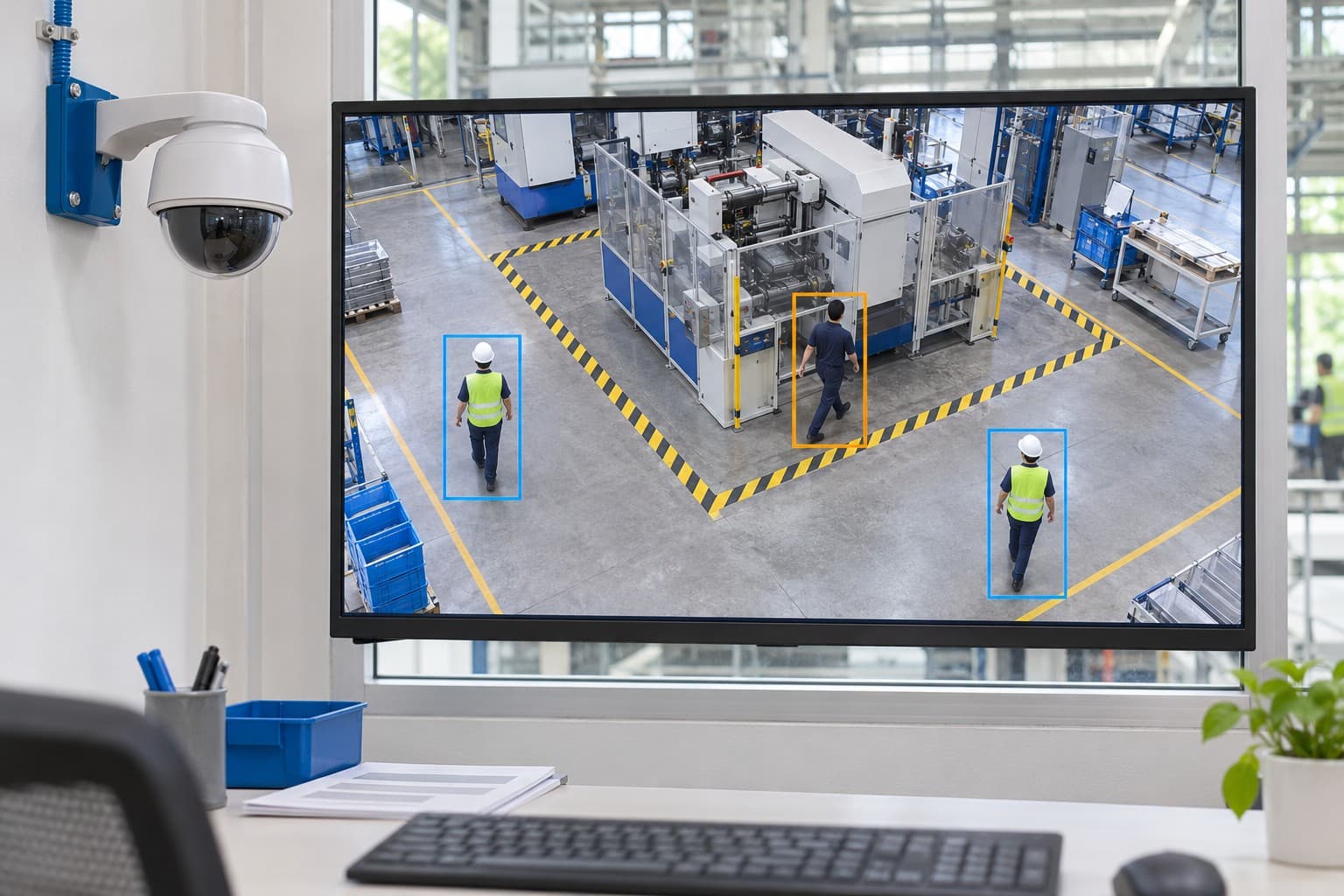
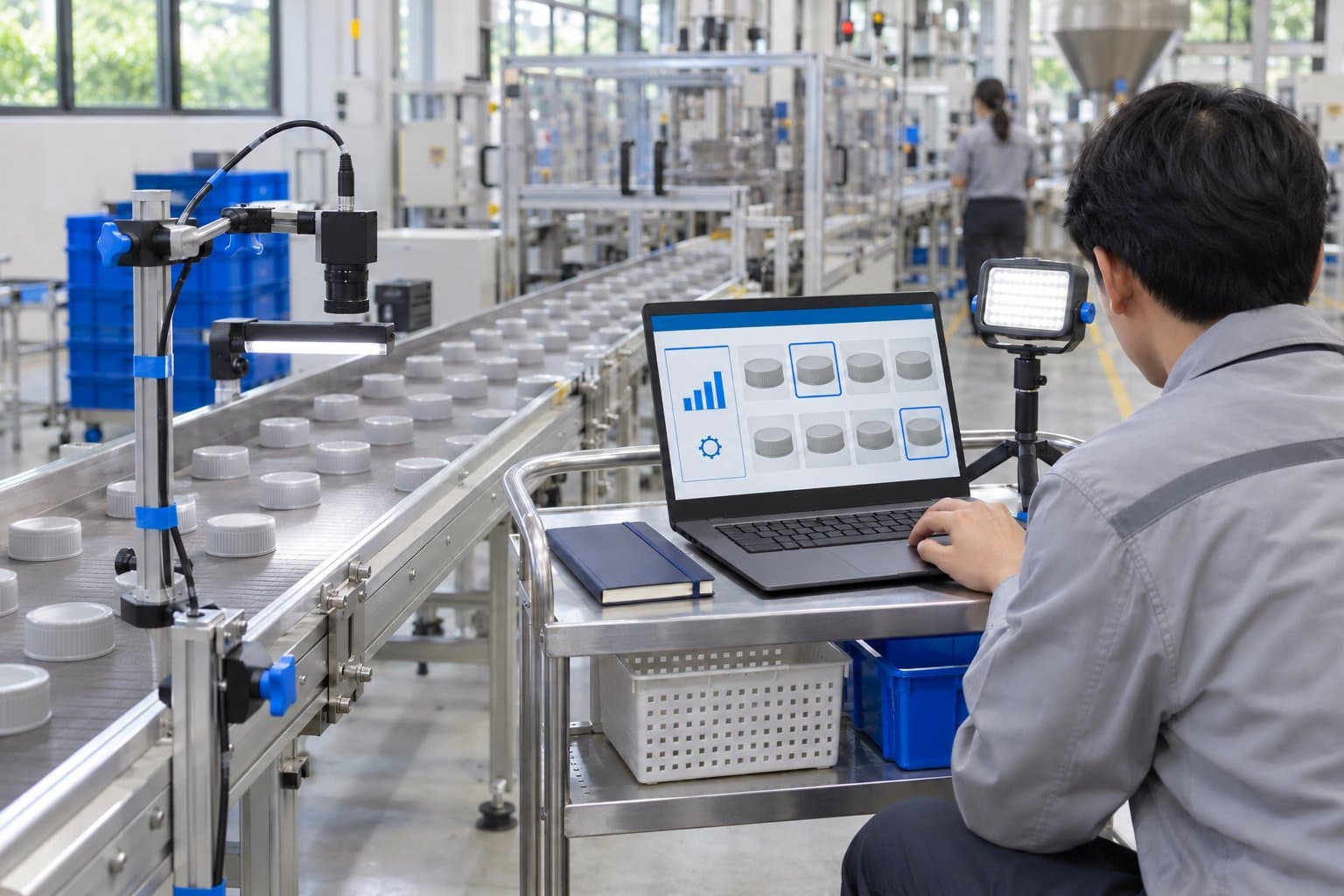
Machine Vision is a system that uses industrial cameras together with software (and AI) to inspect workpieces on a production line in place of human eyes, for example checking for defects, measuring dimensions, reading barcodes/characters, and automatically sorting out bad parts. Its strength is that it can run around the clock without fatigue and apply the same criteria to every piece.
Components of a Machine Vision system
- Industrial camera with resolution suited to the workpiece
- Lighting: the most important variable; the right lighting makes defects stand out
- Lens and mounting distance, with the field of view calculated to fit
- Controller or PC for image processing
- Software/algorithm that decides pass or fail
- Reject mechanism connected to the PLC
What can Machine Vision inspect?
- Measuring size/dimensions (dimensional check)
- Surface flaws (scratches, dents, stains)
- Presence/absence of components
- Reading characters and barcodes (OCR / DataMatrix)
- Colour and uniformity
How do rule-based and AI Vision differ?
Rule-based suits jobs that can be written as clear rules, such as measuring size or checking that all holes are present. AI Vision suits defects that are hard to describe as fixed rules, such as stains, variable surface textures or uneven colour. The AI learns from images of that factory's own real workpieces.
A common misunderstanding: people think a vision problem lies with the camera, but often the root cause is wrongly designed lighting. Choosing the light and its angle is just as important as camera resolution.
Cases suited to Thai factories
- Food and beverage: checking labels, fill level and seals
- Automotive parts: inspecting surface and dimensions, with traceability for tier 1
- Electronics: inspecting PCB/SMT and component placement
Is it worth it? A rough ROI
Investment and payback period vary greatly with the number of inspection points, line speed and the type of defect. Returns usually come from reducing defects that reach the customer, reducing manual sorting work, and reducing claims. So you should measure the line's baseline and assess the most worthwhile points before installing.
Frequently asked questions
Does AI Vision need a lot of images for training?
It depends on how complex the defect is. Typical jobs can start with hundreds to thousands of images per defect type, and more are collected during real use so the model becomes more accurate.
Can it be installed on an existing line without tearing it out?
In most cases it can be added to the existing line by adding camera points, lighting and a reject mechanism, and connecting signals to the existing PLC.
Do image data have to leave the factory?
Not necessarily. We can train and run the model inside the factory, so data does not need to leave the organisation, which makes it easier to follow your organisation's data policy.