6 min read · Machine vision
An AI vision system does not show a warning when it starts inspecting worse. It still returns pass or fail as before. The lens may be fogging, the light may be dimming, or someone may have nudged the camera stand slightly, and nobody notices until defects reach the customer. The simplest fix is a set of parts whose correct answer we know for certain, run through the system before every start of work. The examples in this article are hypothetical.
What is a golden sample?
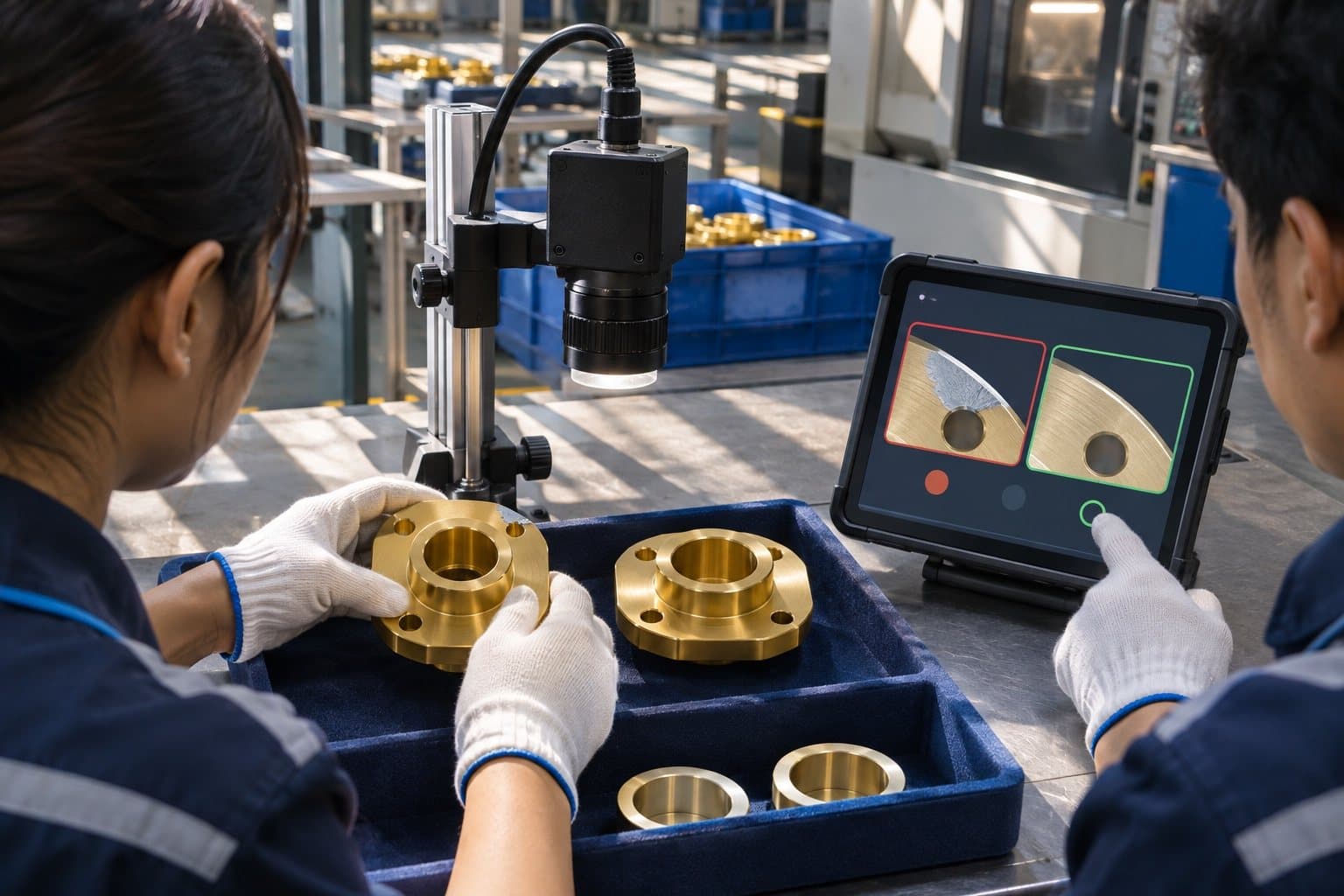
A golden sample is a real part that the person responsible for quality has already judged as good, bad or on the borderline, and kept as a reference. A part on the borderline is called a limit sample. This set is not meant to measure how good the AI is, because there are too few parts for that. It answers one question only: does the system still judge the way it did on the day we accepted it?
Why include good, borderline and bad parts?
- Good parts: check that the system does not reject good product. If a good part starts to fail, the cause is usually the light, the lens or the camera position.
- Clearly bad parts: check that the system still catches easy defects. If one of these gets through, the system has a real problem.
- Borderline parts: the most sensitive to small changes. When the image starts to degrade, these parts change result first, so they act as an early warning.
Good parts being rejected and bad parts being passed are covered separately in the article on false accept and false reject. This article focuses on how to check the system routinely.
How to build the sample set
- Pick real parts from the line. Do not use specially made parts, because their surface and colour may differ from normal production.
- Have at least two quality staff judge each part independently, then discuss only the parts where they disagree. A part they cannot agree on should not be in the set.
- Give each part an ID number and write the agreed answer in a register, for example good, borderline but pass, or bad because of a scratch on the left side.
- Take one reference image of each part with the actual system, recording the date, placement position and the score the system gives (if any).
- Make a duplicate set, or at least photograph the whole set, in case an original part is damaged.
- Keep the set separate from any data used to train or tune the model. If these parts are used to tune the system, they are no longer a neutral check.
The set does not need to be large. A small, well-chosen set that gets checked every day is more useful than a large set nobody wants to run.
When to check, who does it, and what to record
| Event | What to do | Who | Record |
|---|---|---|---|
| Every start of shift | Place every part in the set at its assigned position and compare the results with the answers in the register | Line supervisor or an assigned operator | Date, shift, result per part and who did it |
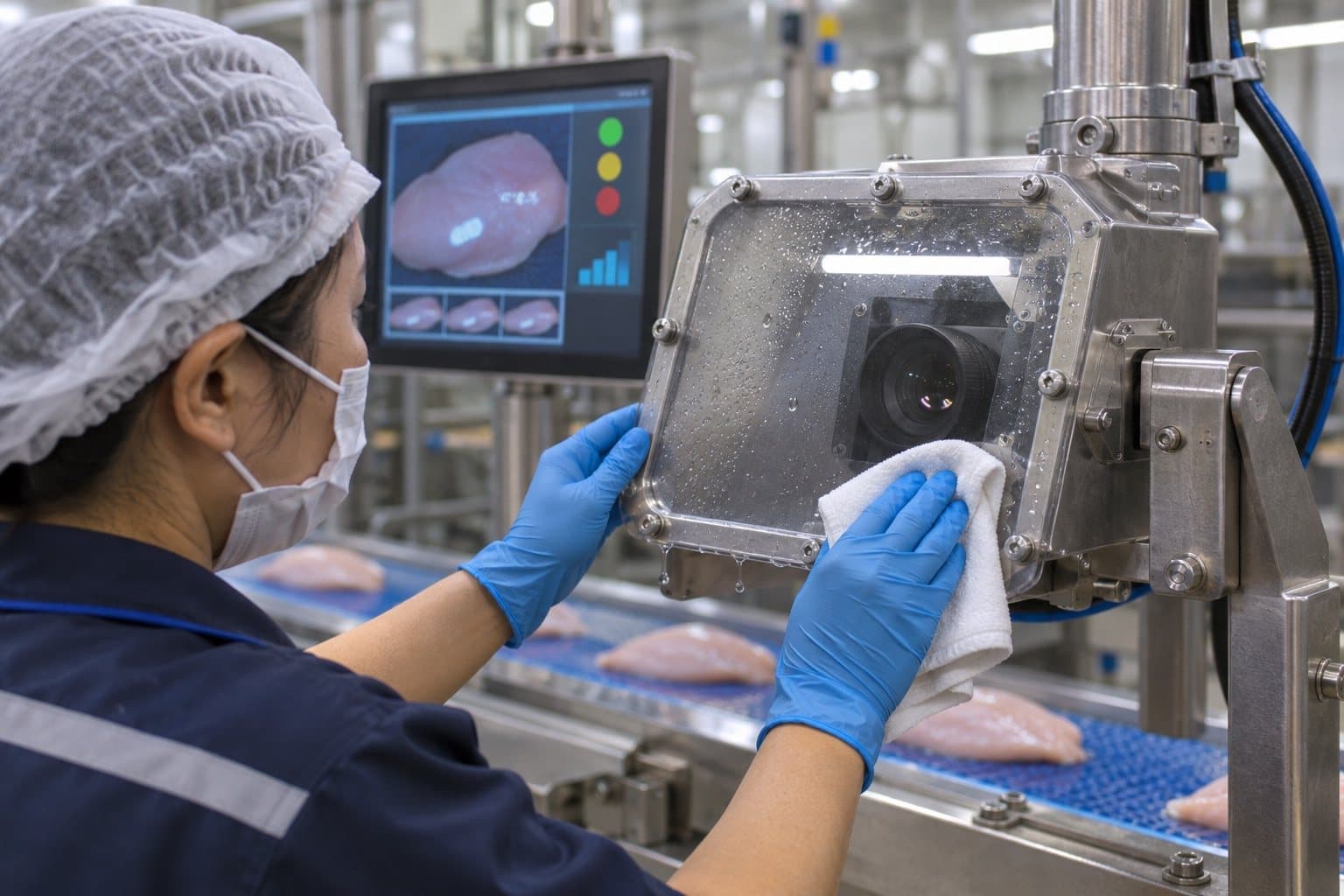
| After washing or cleaning the camera | Re-check the whole set | Line supervisor | Result per part and the reason for the check |
| After changing a lamp or lens, or moving the camera | Re-check the whole set and compare the images with the reference images | Technician or system administrator, with the line supervisor | What was changed, and the results before and after |
| After a model or software update | Re-check the whole set before using it on real production | System administrator, with approval from the quality owner | Versions before and after, and the result per part |
| Every month | Inspect the condition of the parts in the set and review whether they still represent real production | Quality lead | Parts replaced and parts retired |
Decide in advance what to do when a result does not match the answer. For example, if even one clearly bad part gets through, stop the line and notify the system administrator. If a borderline part changes result, check the lens, lights and camera position first rather than adjusting model settings straight away.
How to store and retire the parts
- Store them in a lidded box or a tray with compartments so parts do not knock together and surfaces do not get scratched further.
- Handle them with clean gloves as the job requires, because fingerprints or oil can change the image.
- Check metal or rubber parts periodically for rust or colour change. Food or perishable items do not work as real samples; use models or images instead.
- Retire parts that are damaged, discoloured or no longer like current production, for example after a change of material or design, and record the reason in the register.
- When a part is replaced, take a new reference image and have two responsible people judge it again.
Common mistakes
- Using the same sample set as the model training data, so the system passes because it has memorised those parts.
- Having only clearly bad parts, so the system looks fine every day but gradual degradation goes unseen.
- No register, so everyone remembers differently which parts should pass.
- The same person runs the check every day with no one double-checking, so steps start to get skipped when people are rushed.
- Adjusting the system’s threshold so it passes the sample set, without finding out why the result changed.
Hypothetical example: a brass parts factory
Suppose a line inspects brass flanges for cracks and chips with a single camera. The quality team builds a sample set of 12 parts: 5 good, 4 borderline and 3 bad, 12 in total. Each part is placed 3 times, giving 36 inspections per check.
One morning, after a technician replaced a lamp, the good and bad parts gave the registered result every time, but one borderline part failed in all 3 runs even though the register says it should pass. The line supervisor stopped and compared the images with the reference images, and found the image was dimmer and the shadows had changed angle. After the lamp position was put back, all 36 inspections of the set matched the register and work resumed. Without the borderline parts, the system might have looked normal for several more days.
Limits and cautions
A sample set can only check what is in the set. If a new type of defect appears on the line, the set will not see it, and passing the set does not mean the system inspects real production correctly in every respect. Use it together with random checks of real production and long-term monitoring. The figures in this article, such as 12 parts or 3 runs, are hypothetical examples and must be set according to each factory’s work and risk.
Starting references
- Wikipedia — Calibration
- Wikipedia — Measurement systems analysis
- Wikipedia — Inter-rater reliability
- Google ML Crash Course — Classification: Accuracy, precision, recall