6 min read · Smart factory
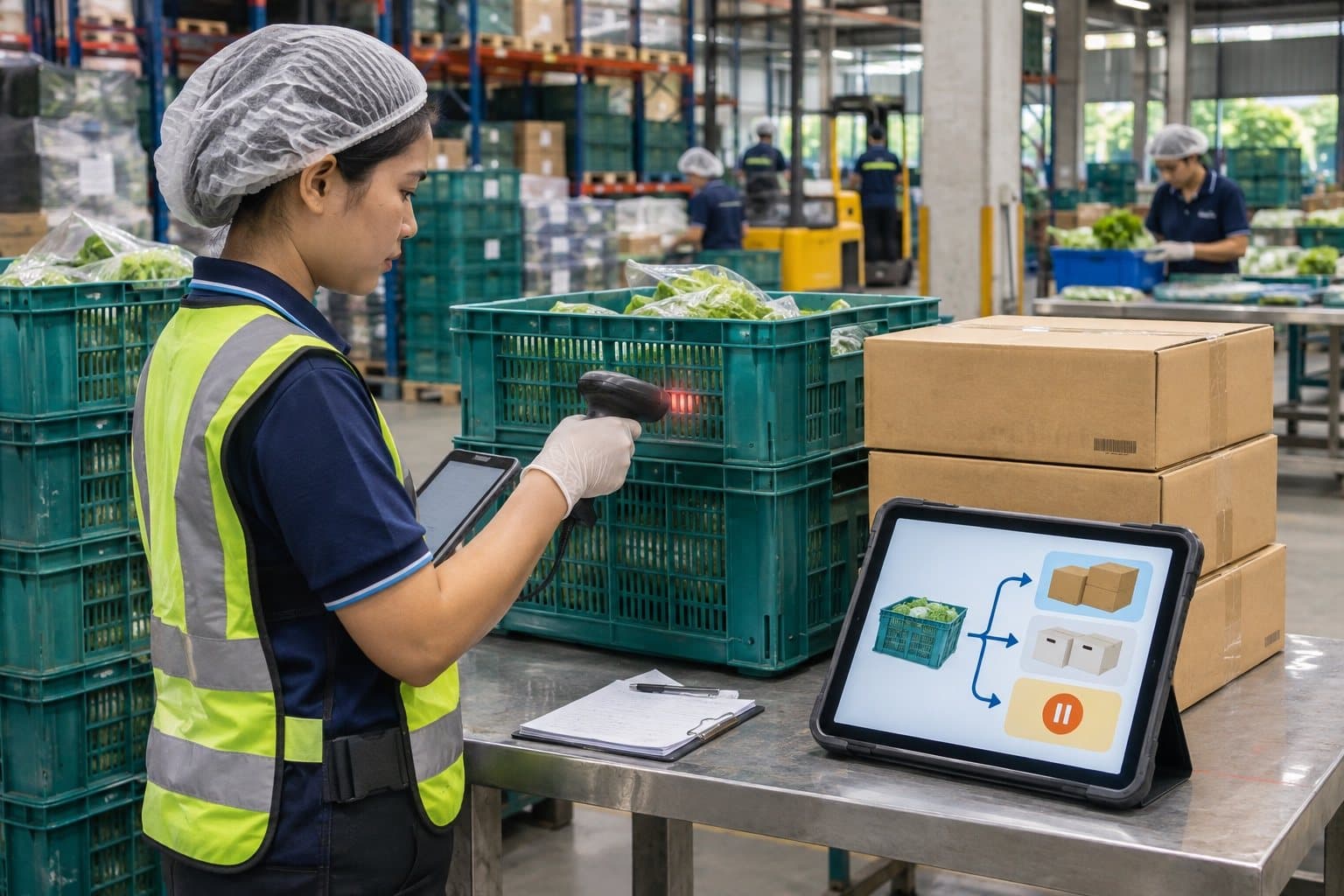
Many factories already have a traceability system: lot numbers, labels, logbooks. But they have never tried using it when someone asks which raw materials went into a lot and who it was shipped to. A mock recall is a way to try answering that question before any real incident.
This article focuses on how to run the exercise and how to read the result. It does not cover the full design of a traceability system; that is in the article on production lot traceability. The example here is hypothetical.
Why run a mock recall
Gaps in a traceability system are usually invisible during normal work. A label has fallen off, a delivery note lists the lot number incompletely, or a raw material lot number was written in a different notebook. Everything looks fine until you actually have to trace something. A mock recall exposes these gaps early, on a day when nobody is under pressure.
The exercise measures two things: how long it takes to answer, and whether the answer is complete. Both numbers can be compared with the next exercise.
Steps for one exercise
- Pick one finished-goods lot. Have the auditor or a supervisor choose it on the day, not the person who prepared the documents in advance.
- Start the timer and assign two people to answer: one traces backward to raw materials and packaging, the other traces forward to customers and shipments.
- Backward trace: find the raw material lots, suppliers, receiving dates and quantities used for this lot.
- Forward trace: find who received how many units of this lot, on which dates, and how many units remain in the warehouse.
- Add the numbers up. The quantity produced must equal the quantity shipped, plus what remains in stock, plus what was scrapped or kept as samples. Any difference you cannot explain is a gap.
- Stop the timer when both traces are answered. Record the time, the gaps found and who has to fix them.
If your product falls under a regulator's rules, such as food or drugs, the target times and the required record formats must be checked directly with the auditor or that authority. This article does not set those figures.
Checklist for the exercise
| Item | What to check | Who does it | How often |
|---|---|---|---|
| Trace back to raw materials | From the product lot number, find every raw material lot used and the quantities | Production or raw material store | Run as a periodic exercise, for example every quarter or half year |
| Trace forward | From the product lot number, find the delivery notes, customers and quantities shipped | Sales or warehouse | Run together with the backward trace |
| Do the totals match | Produced versus shipped plus remaining plus scrap/samples | Exercise coordinator | Every exercise |
| Time taken | From the start of the question to both traces answered | Exercise coordinator | Every exercise, compared with the previous one |
| Missing documents | Note which steps required digging through paper or phoning someone | Exercise coordinator | Every exercise |
Gaps that often turn up
- The raw material lot number is recorded at receiving but not when the material is issued to the line, so you cannot tell which raw material lot went into this product lot.
- The delivery note has no product lot number, only the model name and quantity.
- A pallet is split across several customers but recorded as a single line.
- Returned goods or retained samples are not deducted from the total.
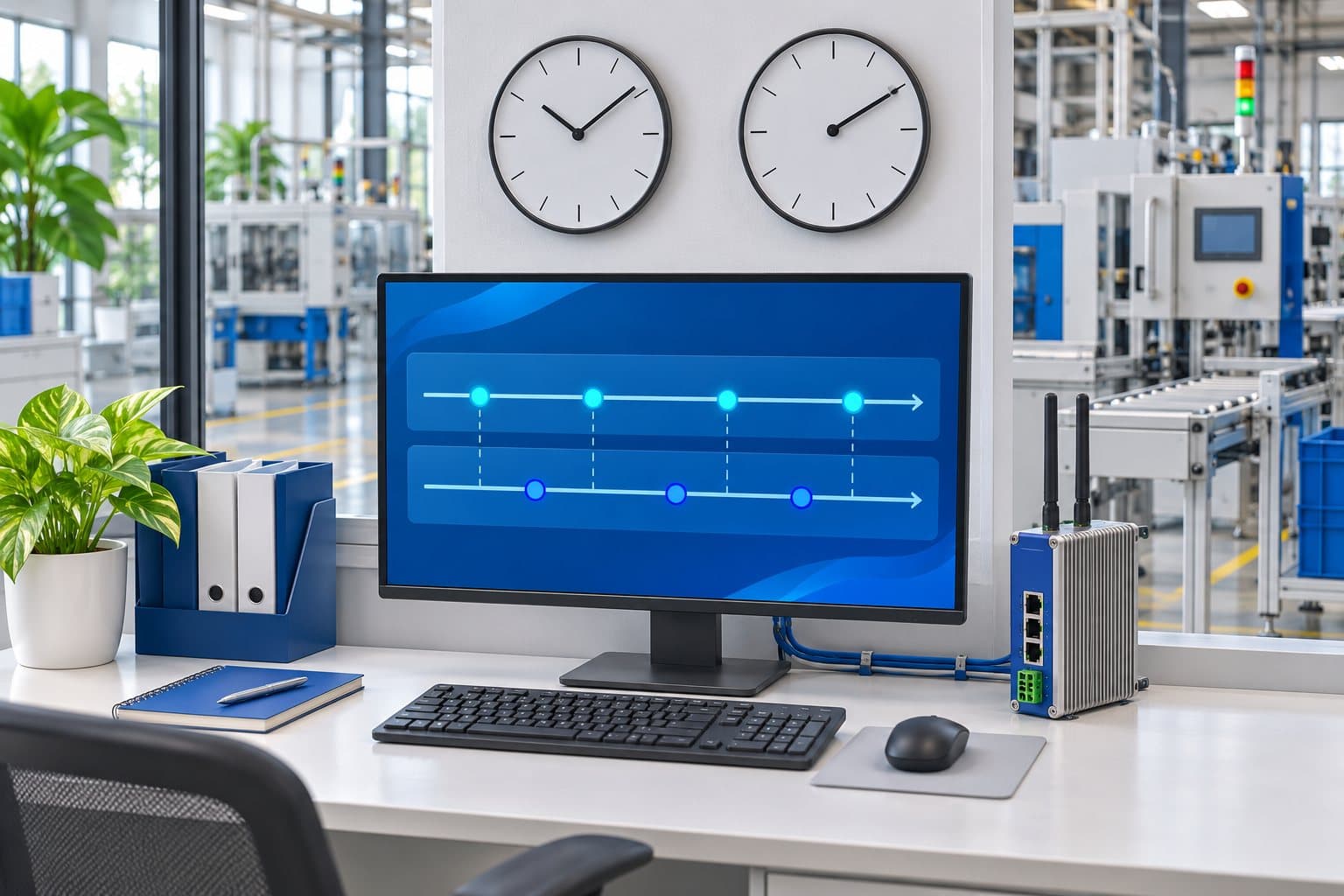
- Times in the system and times in the logbook do not match, so events cannot be put in order. See the article on time and missing data in factories.
- The one person who knows where the documents are stored is on leave, and nobody else can find them that day.
Hypothetical example: packed fresh-cut vegetables
Suppose a fresh-cut vegetable packing plant picks product lot LV-1104, which produced 480 boxes. The backward team finds 3 raw material lots, with quantities of 500 kg plus 400 kg plus 300 kg, 1,200 kg in total, which matches the material issue slip.
The forward team finds shipments to 3 customers: 200 plus 150 plus 100, 450 boxes in total, with 25 boxes left in the cold room. The sum is 475 boxes against 480 produced, so 5 boxes are still unexplained.
The first round took 3 hours 20 minutes, mostly spent digging through delivery notes kept on paper and looking for the 5 missing boxes. They turned out to be boxes set aside as quality-check samples that were never recorded in the system.
The team fixed two things: the lot number is now scanned onto every delivery note, and a sample field was added to the production record. In the second exercise the trace took 1 hour 40 minutes and the totals matched. All figures are hypothetical.
Limitations and cautions
A single exercise does not prove the system is good. It only shows that the lot chosen that day could be traced. Run several lots, and pick complicated ones, for example lots that used many raw materials or were split across many customers.
The times of 3 hours 20 minutes and 1 hour 40 minutes, the 480 boxes and the other figures in the example are hypothetical, not benchmarks. For the legal or standards requirements that apply to your product, ask your auditor or the relevant authority. Software can make searching faster, but if the source records are incomplete, nothing can be traced.
Starting references
- Wikipedia — Traceability
- Wikipedia — Product recall
- U.S. FDA — FSMA Final Rule on Requirements for Additional Traceability Records for Certain Foods