6 min read · Smart factory
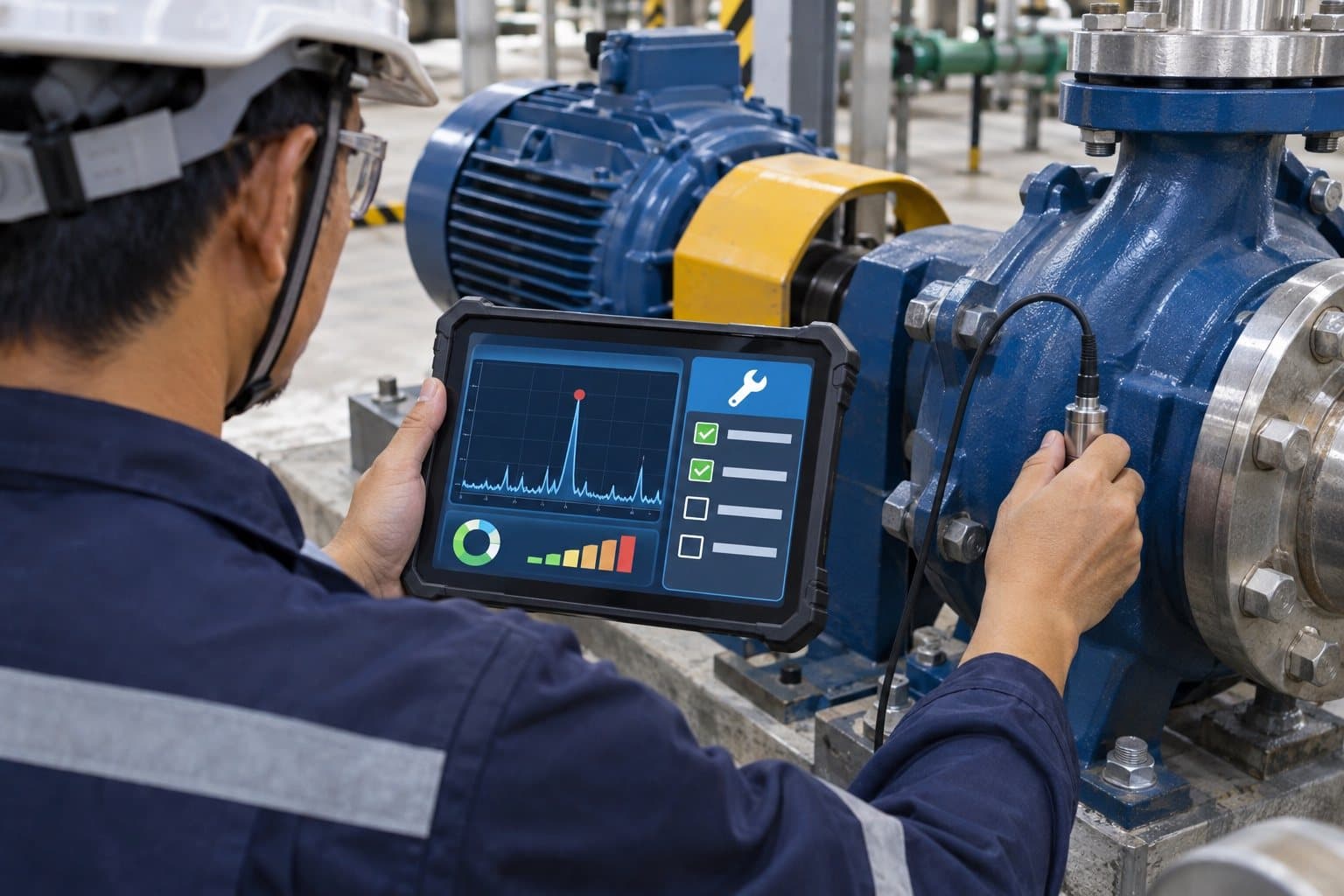
Predictive maintenance systems usually raise an alert when vibration, temperature or current drifts from normal. If nobody is responsible for opening it and recording the result, the alerts turn into noise, the team starts to ignore them, and a real alert gets missed.
The example in this article is hypothetical. It covers the alert review procedure, not how to build a model.
An alert is not a repair order
An alert only says that a value differs from what it used to be. It does not give the cause, and it does not say for certain how many days of life remain. A person still has to look at the machine and decide.
A model-based system is the same. A model can raise a false alert or miss one. A false alert costs a technician's time. A missed alert means a machine stops without warning. Both must be recorded so they can be reviewed.
Set the owner, response time and what must be recorded
This table gives example starting values. Your team needs to adjust them to the criticality of the machine and the work shifts.
| Alert level | Who receives it | Must look within | What to record |
|---|---|---|---|
| Watch | Area technician | 1 working day | What the graph shows, and whether to keep watching or close |
| Warning | Shift maintenance technician | 4 hours | Result of the inspection at the machine, photos, action taken |
| Critical | Maintenance supervisor and production supervisor | Immediately, within 30 minutes | Decision to stop or continue, the reason, who approved |
Steps to review one alert
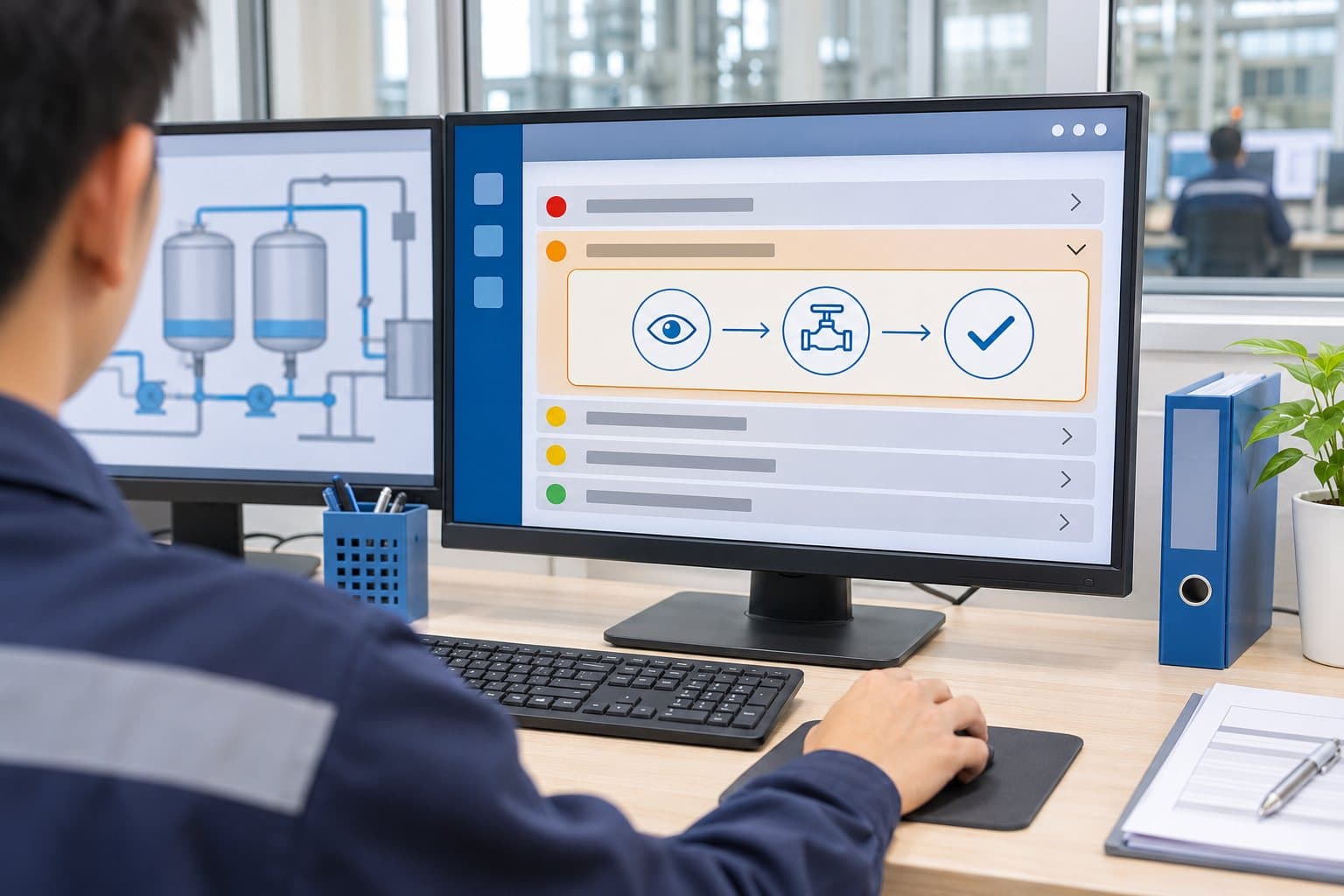
- Open the history graph for that measurement point and see whether the value changed gradually or jumped suddenly.
- Check that the data can be trusted: the sensor cable is not loose, the value is not stuck, and it is not zero because the signal dropped.
- Compare with what was happening on the floor at the same time, such as a start-up, a product change, a wash-down or a speed change.
- Go and look at the machine. Listen, feel the temperature safely, and re-measure with a handheld instrument if available.
- Choose one of four outcomes: real abnormality found, false alert, bad data, or inconclusive and keep watching.
- Record the result and action, then close the alert with a reason. Do not close it silently.
What to record
- The time of the alert, the time someone opened it and the time it was closed, to see whether the response met the set time.
- The name of the inspector, the machine and the measurement point that alerted.
- The value on the graph at the time of the alert and the value re-measured at the machine.
- What was found, for example a noisy bearing, a loose bolt or nothing abnormal, with photos.
- The outcome from the four above and, for a false alert, its cause, for example it happened during start-up.
- The action taken, for example tightened a bolt, replaced a part, adjusted a threshold or kept watching.
Feeding results back into thresholds
Every month, summarise the number of alerts by outcome, then see which kinds of false alert keep recurring from the same cause. Fix that cause first, for example by adding a delay after machine start-up, or by separating thresholds by the product being made.
- Change one thing at a time and record what was changed and when, so the results can be compared.
- Be careful not to tune thresholds until there are no alerts at all, because that can cause a real alert to be missed.
- Also keep the cases where a machine failed without a prior alert. This is the most important data for tuning the system.
- If a model is used, feed the human-checked results back as retraining data, and have a person approve before a new model goes into use.
Common mistakes
- Sending alerts to a shared chat group with no named recipient, so everyone assumes someone else is looking.
- Closing alerts without a reason, so next month there is no data to tune thresholds with.
- Using the same threshold for every machine, even though size and load differ.
- Reading an alert as a certain failure and stopping the machine without checking, or treating it as a false alert without going to look.
Hypothetical example: reviewing one month of alerts
Suppose that in 30 days the system sent 18 alerts about motors and gearboxes. The maintenance team checked every one and recorded the results as follows.
| Inspection result | Count | Share |
|---|---|---|
| Real abnormality found | 5 | 27.8% |
| False alert | 9 | 50.0% |
| Inconclusive, keep watching | 4 | 22.2% |
| Total | 18 | - |
Check the arithmetic: 5 + 9 + 4 = 18, and 5 ÷ 18 = 27.8%, 9 ÷ 18 = 50.0%, 4 ÷ 18 = 22.2%.
Of the 9 false alerts, 6 occurred in the first 10 minutes after the machine started, when vibration is naturally high. The team decided that the system should not send alerts in the first 10 minutes after start-up, except at the critical level. They will review next month whether false alerts fall and no real alert is lost.
Limitations and cautions
- The numbers in the example, the response times and the alert levels are all hypothetical. They must be set from your actual machines and the risks at your site.
- The share of real and false alerts differs greatly between plants, so do not compare directly with this example.
- Inspection at the machine must follow the plant's safety procedures, for example lockout/tagout before going near rotating parts.
- An alert system can reduce the chance of missing a problem, but it cannot replace scheduled inspections and the technician's judgment.
- Decisions to stop a machine for safety reasons must follow your plant's procedures and authorised people.
Starting references
- Wikipedia — Predictive maintenance
- Wikipedia — Condition monitoring
- Wikipedia — Alarm management