6 min read · AI for business · AI by department
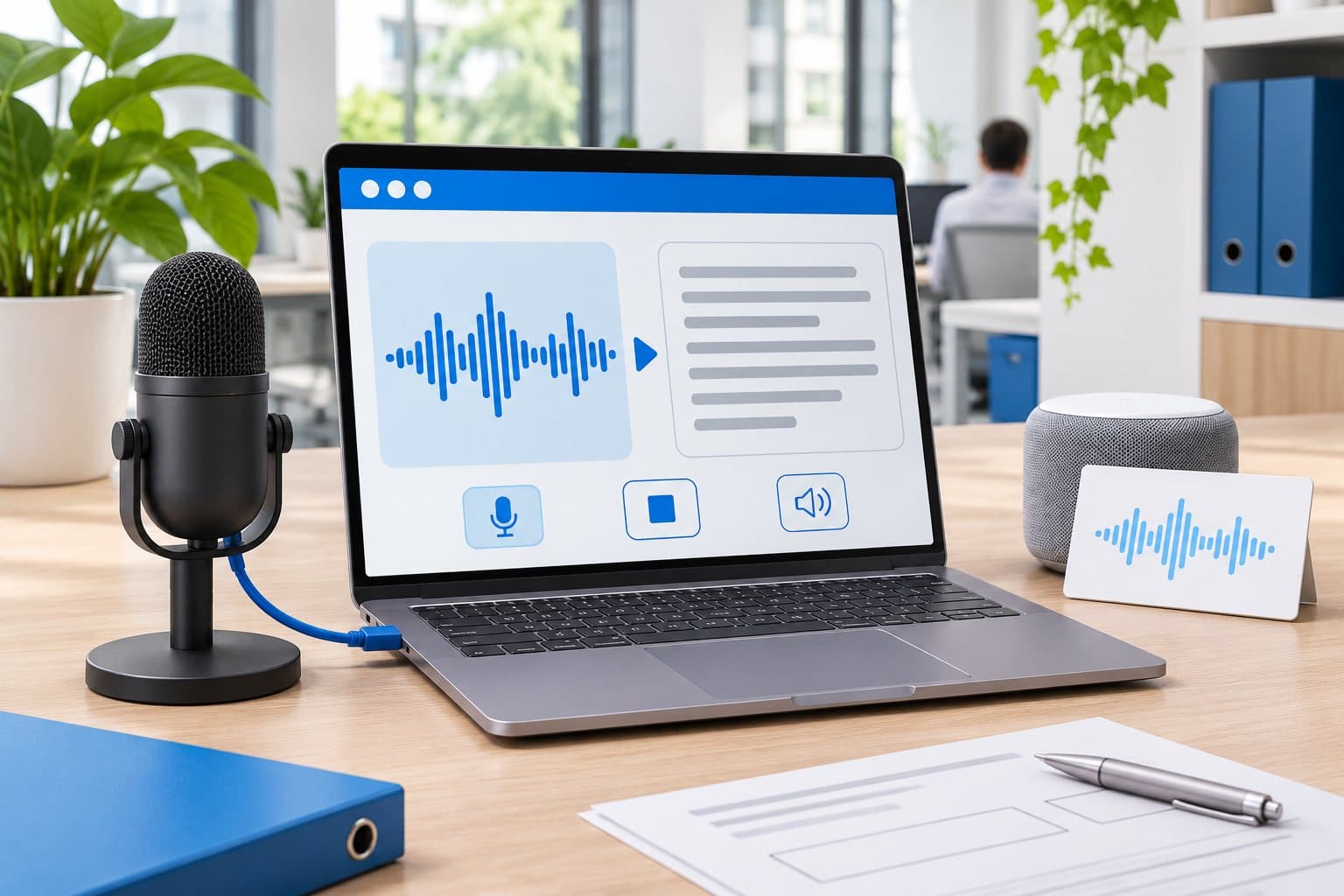
A meeting ends and nobody sends a summary, or it arrives so late that people have forgotten what was agreed. Many companies run into this. AI transcription and summary tools can help, but two things need to be set up properly before using them: recording people's voices, and the accuracy of the items the AI extracts.
This article gives general practice for offices and factories. The examples are hypothetical, and the legal content is general information, not legal advice.
What AI can and cannot do
- Transcribe speech to text (speech-to-text) so that it can be searched later.
- Summarize the main points and pull out action items as a list.
- Format a table of who does what, and by when.
What AI certainly cannot do is know who actually agreed to take a task. Unclear audio, names that sound alike, or a sentence such as "I'll take a look at it" can be assigned to the wrong person, and loose dates such as "end of the month" or "next Friday" can be converted into the wrong date.
Tell participants and get consent before recording
The voice and speech of an identifiable person is personal data. Before recording a meeting, you should therefore inform the participants and obtain consent. According to the unofficial English translation of the Personal Data Protection Act B.E. 2562 (2019) (PDPA) published by the Office of the Personal Data Protection Committee, the relevant principles are as follows.
- Section 19: collecting, using or disclosing personal data requires the data subject's consent before or at that time, unless this Act or another law allows it. The request for consent must be clear and separate from other text, and withdrawing consent must be as easy as giving it.
- Section 22: collect only what is necessary for a lawful purpose.
- Section 23: before or at the time of collection, the data subject must be told the purpose, the data collected, the retention period, the categories of people who will receive the data, the contact details of the data controller, and the data subject's rights.
The law also provides other bases that do not require consent in some cases, so consent is not the only basis. But which basis applies to which kind of meeting is a question for your legal team or the company's Data Protection Officer (DPO). For participants from outside the company, such as customers or suppliers, always inform them and obtain consent first.
If the meeting covers sensitive matters, such as disciplinary action, employee health or confidential customer information, consult the legal team before recording or sending the audio outside the company.
A workflow with a human check
- Before the meeting, state in the invitation that the meeting will be recorded and summarized by AI, with the purpose, retention period and contact details.
- At the start of the meeting, briefly ask again whether anyone is not comfortable. If so, stop the recording or make sure that person is not recorded.
- After the meeting, have the AI transcribe and pull out the action items.
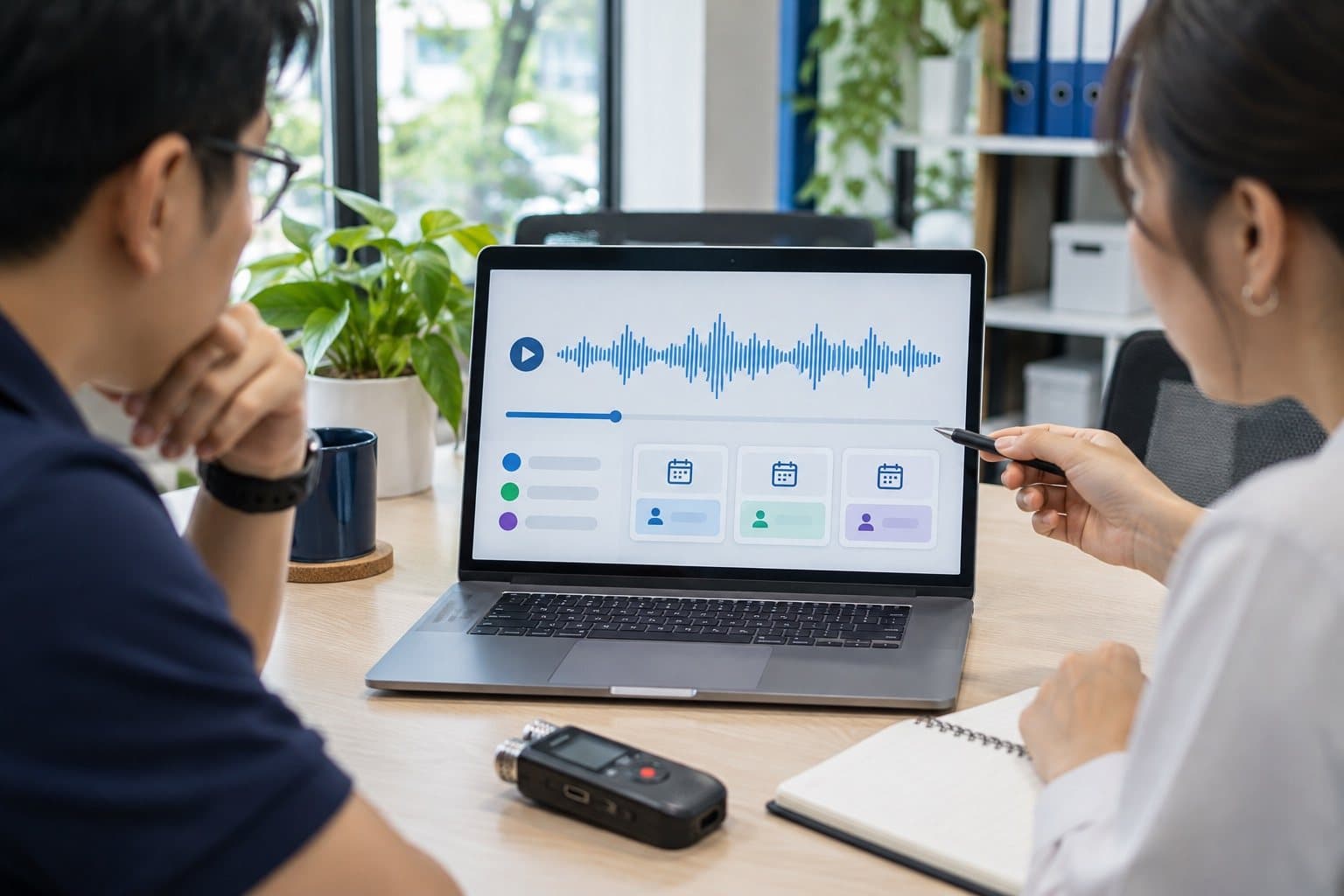
- Have the note-taker or secretary who attended the meeting check each item: does the task match what was agreed, is the owner correct, and is the due date correct.
- Correct them, then send to the participants, and give everyone a set time to object.
- Delete the audio file after the period that was announced, and keep only the reviewed minutes.
Checklist for the items the AI extracted
| What to check | How | Who does it |
|---|---|---|
| Owner | Compare against the audio or the note-taker's notes to see who really took the task. If no name is clear, leave it blank. Do not guess. | Meeting note-taker |
| Due date | Convert words such as tomorrow or next Friday into real dates and check against the calendar. | Meeting note-taker |
| Numbers and codes | Compare quantities, order numbers and machine codes against the documents in the meeting. | The person responsible for that item |
| Missing tasks | Read against the agenda to see whether anything agreed was not extracted. | Chair or note-taker |
| Content that should not be shared | Remove personal or confidential parts before forwarding. | Meeting chair |
Storage and retention period
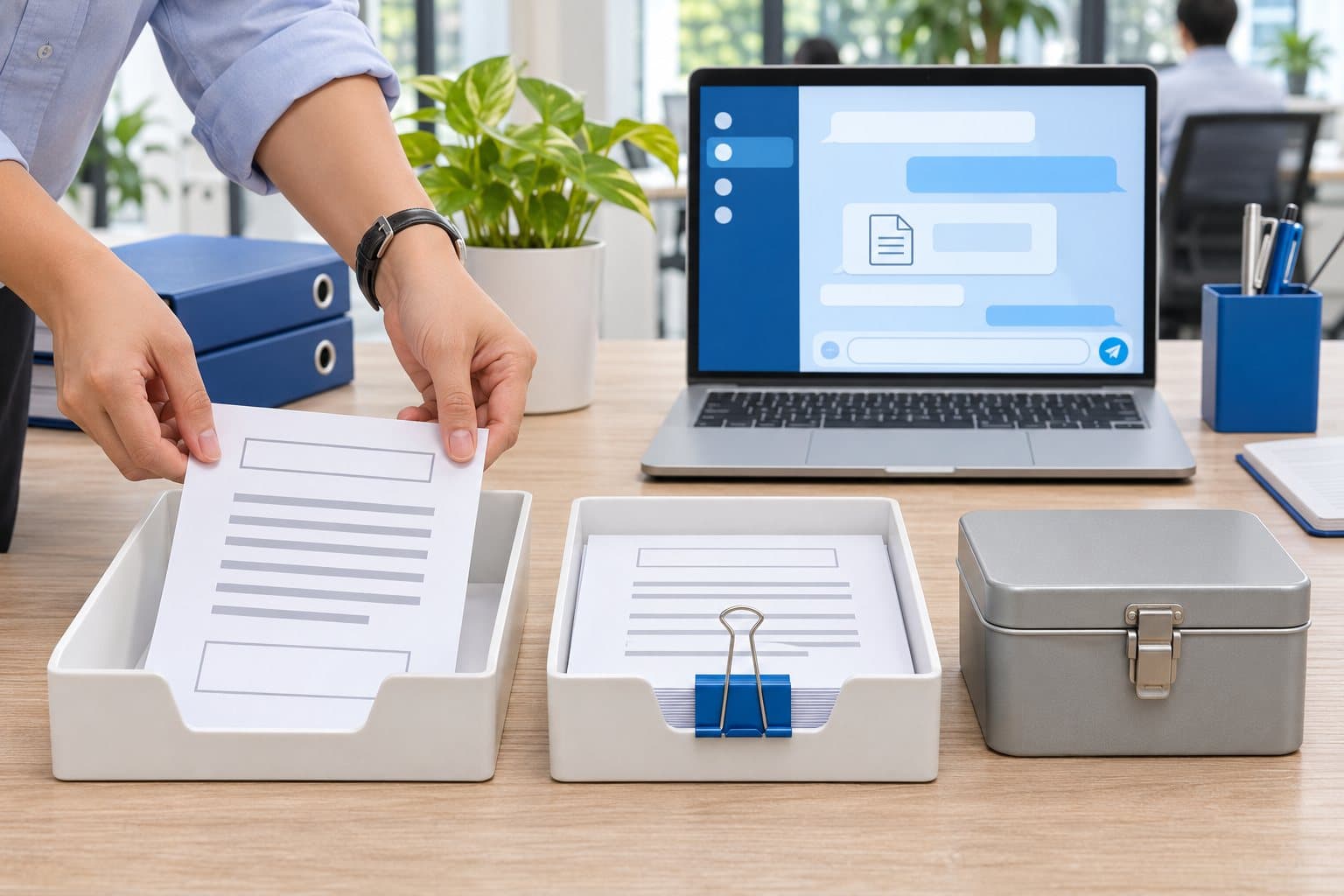
Audio files and transcripts contain more information than the reviewed minutes, so define clearly where they are stored, who can access them and for how long. Do not leave them on personal machines or in each user's free account.
- Set up a central company storage location, with access limited to meeting participants and those concerned.
- Set the retention period for audio files shorter than for the minutes, for example (hypothetically) 7 days after the reviewed minutes are confirmed. This figure is an example, not a requirement. Follow the company's records policy.
- Keep the reviewed minutes according to the company's records management policy.
- Ask the AI provider where the audio is processed, whether it is retained, and whether it is used to train models, and keep the answers in writing.
- Set automatic deletion if the system supports it, and check from time to time that deletion really happens.
Common mistakes
- Recording without telling people, or telling them only in the meeting with no record.
- Sending the AI-generated summary out immediately with no human check.
- Letting the owner field be filled with a name the AI guessed.
- Keeping audio files indefinitely "in case we need them".
- Using employees' personal accounts instead of the company's system, so the company does not know where the data is.
- Using AI for meetings with sensitive information without going through the legal team.
A hypothetical example: a 45-minute production planning meeting
A hypothetical team holds a 45-minute production planning meeting. Participants were informed in advance and everyone gave consent. The AI extracted 12 action items. The note-taker checked them one by one and found the following.
| Check result | Number of items |
|---|---|
| Correct as agreed, no change needed | 9 |
| Wrong owner | 2 |
| Wrong due date | 1 |
| Total | 12 |
The working: 9+2+1 = 12. Items that were right as extracted: 9 of 12 = 75%. Items that needed correction: 3 of 12 = 25%. This means that if the summary were sent without checking, one in four items would be misunderstood by the person receiving the task, which could cause a task to be dropped or the wrong person to do work that is not theirs.
Limits and cautions
The figures in the example, including the 45-minute meeting, the 12 items, the results of 9, 2 and 1 items, and the 7-day audio retention, are hypothetical. They are not real results or requirements. Real results depend on audio quality, language, the number of speakers and the tool used. The legal content in this article is drawn from an unofficial English translation and is stated only in general terms. The law may have exceptions and additional requirements, so consult the legal team or an expert before using it in practice. Also, AI should not be used to evaluate individual employees' performance from their voices in meetings.
Starting references
- PDPC — Personal Data Protection Act B.E. 2562 (English translation, unofficial), Sections 19, 22, 23
- PDPC (Office of the Personal Data Protection Committee) — English home page
- Wikipedia — Records management